
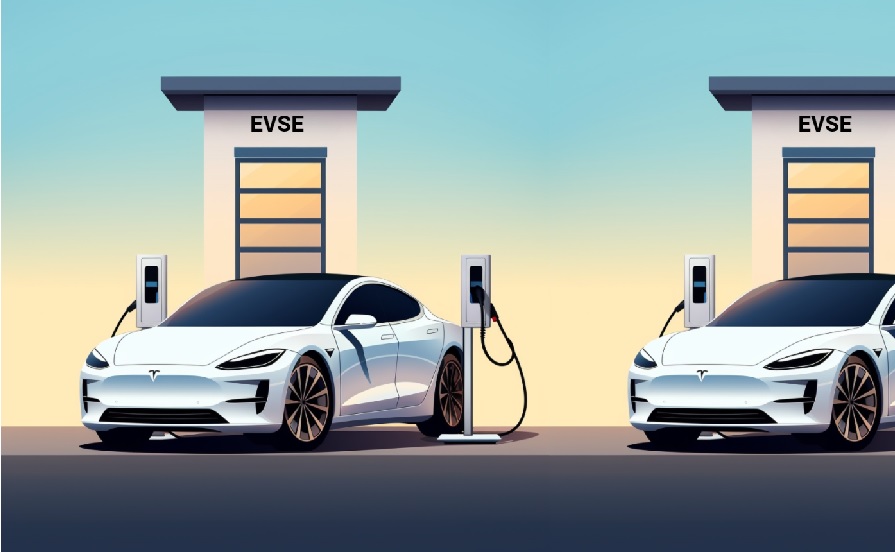
As the world shifts gears towards sustainable mobility, Electric Vehicles (EVs) are no longer a novelty on the roads. They are rapidly becoming an integral part of our daily commute. With the rising adoption of EVs, the focus has simultaneously shifted to EV chargers – the backbone of this electric revolution.
1. The Growing Need for EV Chargers
While EVs promise a cleaner and more sustainable future, they are only as effective as the infrastructure supporting them. As the number of electric vehicles on our roads increases, so does the need for efficient and accessible charging stations.
There are over 3,000 public chargers in Australia, including 470 superchargers, according to a 2021 report.
In the United States, there are 500,000 electric vehicle charging stations. To support the EV fleet in 2025, S&P Global Mobility estimates that 700,000 Level 2 chargers and 70,000 Level 3 chargers will be needed.
2. Different Types of EV Chargers
- Standard Home Chargers (240V): These chargers are often the ones EV owners start with and are compatible with standard Australian electrical outlets. They’re convenient for home use and typically deliver about 15-25 KM of range per hour of charging, though this can vary based on the vehicle and battery type. note that in USA or Canada it is 120V
- Public and Home Fast Chargers (Single and Three-Phase AC up to 22kW): These chargers are faster and can be found in public charging stations and homes with dedicated EV charging setups. They typically provide anywhere from 25-110 KM of range per hour, depending on the specifics of the charger and vehicle. Note that in USA or Canada, it is 240V .
- DC Fast Chargers: It is Level 3 Charger. These are the fastest EV chargers available, catering to rapid charging needs. Often located along highways or in commercial areas, they can charge an EV’s battery up to 80% in under an hour.
3. The Rise of Smart Charging
With IoT (Internet of Things) and AI (Artificial Intelligence) integration, EV charging has entered the ‘smart’ era. Modern EV chargers can:
- Schedule charging during off-peak hours to avail lower electricity rates.
- Integrate with renewable energy sources like solar panels.
- Provide real-time data on charging status, energy consumption, and more.
Many modern EV chargers, especially those integrated with smart grids or IoT networks, provide APIs (Application Programming Interfaces). These APIs allow developers to integrate the charger’s functionalities with other software systems or applications.
- ChargePoint: One of the largest EV charging networks, ChargePoint provides an API that allows users and developers to interact with their stations, gather data, and even initiate charging sessions.
- Tesla: Tesla’s Supercharger network is proprietary, but Tesla has a somewhat unofficial API that third-party developers frequently use to access data about Tesla vehicles and their charging statuses.
- Greenlots: Greenlots offers a cloud-based platform for their EV charging solutions, and they have an API for integration and data access.
- EVBox: A leading manufacturer of EV charging stations, EVBox provides an API to manage and gather data from their chargers.
- Blink: Blink Network’s API can be used to integrate with their EV charging infrastructure, allowing for session data retrieval, status checks, and more.
- OcppCloud: Offers a platform and API compatible with the Open Charge Point Protocol (OCPP), enabling functionalities like remote start/stop of charging sessions, reservation of charging spots, and fetching data.
- eDRV: This platform provides APIs for building and operating EV charging networks. It’s not a charger manufacturer per se, but it’s relevant for developers looking to build applications around EV charging.
- JuiceNet by eMotorWerks: Provides smart charging solutions and an API that allows users and developers to access and control charging.
- Wallbox: Their chargers are designed for both public and private use, and they offer an API for integration.
4. The Importance of Location
The strategic placement of EV chargers is crucial. Urban areas, with a high density of vehicles, need more public charging stations. Simultaneously, highway rest stops need fast chargers to help long-distance EV travelers. Many businesses are also integrating EV chargers as a part of their infrastructure, recognizing the growing number of EV users.
5. The Future of EV Charging
The future holds exciting prospects for EV charging:
- Wireless Charging: Imagine charging your vehicle by simply parking it over a charging pad!
- V2G Technology: Vehicle-to-grid (V2G) technology will allow EVs to consume energy and send it back to the grid.
- Universal Chargers: One charger compatible with all EVs, simplifying the charging process.
6. Charging Station Management Software
Charging Station Management Software (CSMS) is a solution designed to manage and control electric vehicle (EV) charging stations.
Here are the primary features and functionalities of Charging Station Management Software:
- Access Control: CSMS allows operators to control who can access the charging stations, either through RFID cards, mobile apps, or QR codes.
- Billing and Payment Integration: The software can automate the billing process based on the amount of energy consumed, duration of charging, or a flat fee. It can also facilitate payments via credit cards, mobile wallets, or other payment systems.
- Real-time Monitoring: Operators can view the status of each charging station in real-time, checking whether they’re available, occupied, or out of service.
- Data Analytics and Reporting: CSMS can collect data on usage patterns, energy consumption, and more. This data can be analyzed to derive insights, such as peak usage times or frequently used stations.
- Maintenance and Alerts: The software can send alerts for any faults or issues with the charging stations, ensuring timely maintenance and minimizing downtime.
- Dynamic Pricing: Based on demand, time, or other factors, the software can adjust the pricing for charging, encouraging users to charge during off-peak times or offering promotions.
- Integration with Renewable Energy Sources: Some advanced CSMS can integrate with renewable energy sources like solar panels or wind turbines, managing the flow of energy and optimizing green energy usage.
- User Management: Operators can manage user profiles, track individual energy consumption, offer loyalty programs, and more.
- Remote Control: Through CSMS, operators can remotely start or stop a charging session, reset a station, or even update the firmware of the charging equipment.
- Interoperability: Some CSMS solutions support protocols like OCPP (Open Charge Point Protocol), ensuring that the management system can communicate with a wide range of charging equipment from different manufacturers.
- Reservations: Some platforms allow users to reserve charging slots in advance, ensuring availability when they arrive.
Startup
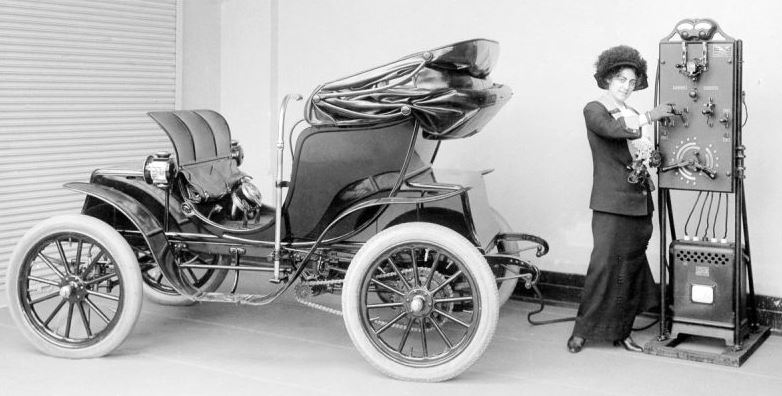
Hard to believe but by 1917, an impressive 38% of cars were electric. However, the widespread adoption of electric vehicles was hindered by a critical factor: the insufficient supply of electrical energy.
As we aim to learn from past obstacles:
Idea 1) A sophisticated load-shedding algorithm tailored for smart cities:
This algorithm would dynamically manage the energy load of the city by intelligently controlling the charging of electric vehicles based on current grid capacity and demand. By integrating real-time data from various sources, such as weather, traffic, and energy consumption patterns, this system could optimize energy usage across the city, prevent grid overload, and even prioritize charging based on vehicle usage patterns and user preferences.
Idea 2) Forward-thinking concept of establishment of a Virtual Power Plant (VPP) utilizing V2G (Vehicle-to-Grid) technology. This approach treats electric vehicles not just as consumers of energy but as mobile storage units that can supply energy back to the grid when it’s most needed. By aggregating the stored energy in EV batteries, a VPP can provide supplementary power during peak times, enhance grid stability, and support the integration of renewable energy sources.

 Electrical Engineer