

Index
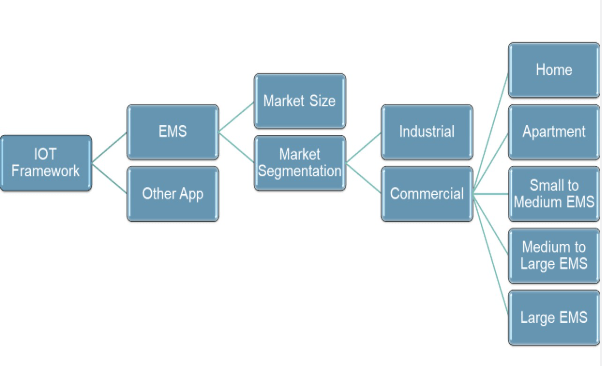
IOT Framework
Before we begin discussing EMS, let’s clarify IoT. Internet of Things is not software, but a framework or ecosystem for developing applications. In IoT environments, software such as Scada systems, OEE applications, and asset tracking management systems can be written. As an example, all the following applications are IoT applications:
- Energy Management Software (EMS): Schneider Electric’s EcoStruxure
- Overall Equipment Effectiveness (OEE) Software: Parsec TrakSYS
- Supervisory Control and Data Acquisition (SCADA) Software: Ignition by Inductive Automation
- Asset Tracking and Management: IBM Maximo
- Smart Factory Software: Siemens MindSphere
- Predictive Maintenance: GE Predix
EMS
Definition of EMS has varying interpretations, but let’s agree on our definition:
- Record of Energy Usage: EMS monitors and records energy consumption, either automatically through a meter or manually by entering data.
- Data Storage Location: Depending on the system setup, EMS data can be stored on-premises or in the cloud.
- Analytics Post-Data Collection: Analyzing data from an EMS helps identify trends, inefficiencies, and opportunities for saving energy.
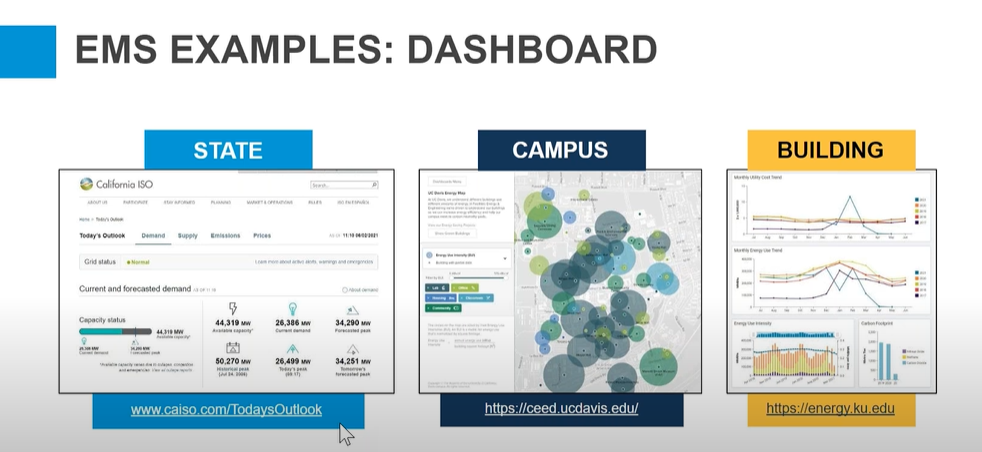
Every EMS toll has (at least) below sections:
TRENDS – DASHBOARDS: Use the Dashboards application to view high-level historical and real-time data. Use the Trends application to monitor current system conditions by displaying real-time data in a graphical format.
DIAGRAMS: View Vista diagrams in the Web Applications interface. Vista is one of the engineering tools used to build and display custom graphical representations of the power system. you can View the network diagram, SLD; or meter hierarchy level
ALARMS: see /alarm-management/
REPORTS: The purpose of reports is essentially to execute tailored queries using a user interface that enables choices such as date ranges, device, minimums and maximums, etc and all presented appealingly.
Market Size
Energy Management Systems (EMS) market size varies significantly by geographic location, reflecting differences in regulatory environments, technological adoption, and energy efficiency priorities. In regions with strict energy regulations and high energy costs, advanced EMS technologies are commonly used to optimize energy usage and reduce operational costs.
a rough estimation based on common distributions seen in global markets, understanding that the specifics can vary greatly by country and over time:
- Building (Commercial and Residential): This sector often represents a significant portion of the energy management market due to the extensive energy use in heating, cooling, lighting, and appliances. It could potentially account for 30-40% of the market.
- Manufacturing: Given the high energy demands of manufacturing processes, this sector could also be significant, possibly around 20-30% of the market.
- Utilities: This sector’s focus on energy production and distribution might make it a smaller segment of the energy management market, potentially around 10-15%.
- Transportation: With increasing emphasis on energy efficiency and electric vehicles, this segment might account for 10-20% of the market.
- Retail: The retail sector, including both small stores and large shopping centers, could represent around 5-10% of the market.
- Healthcare: Given the critical nature of energy use in healthcare for operations and patient care, this could be around 5-10% of the market.
- Government and Public Sector: This includes energy management in government buildings, infrastructure, and public services, potentially accounting for 5-10% of the market.
It should be noted that in Australia there are no mandatory laws for residential or commercial buildings, but in the USA local lows are mandatory.
Market Segmentation
Energy Management Systems (EMS) market size varies significantly by geographic location, reflecting differences in regulatory environments, technological adoption, and energy efficiency priorities. In regions with strict energy regulations and high energy costs, advanced EMS technologies are commonly used to optimize energy usage and reduce operational costsEMS can be segmented into three distinct sectors: industrial, residential/commercial and the Energy sector. Each segment caters to unique user needs and operational requirements.
Industrial EMS is designed for manufacturing plants and heavy industries, integrating with existing control systems to optimize energy usage without affecting production. Energy consumption is often monitored through equipment like Variable Speed Drives (VSDs) and managed via industrial-specific EMS or generic SCADA systems.
Residential/Commercial EMS The Residential/Commercial EMS segment targets homes, office buildings, and small businesses, providing energy management systems tailored to these environments. Energy consumption is primarily measured by EMS apps that receive data from meters, as opposed to industrial applications.
Note that some large customers in the industrial or commercial sectors use substations or embedded networks as part of their operations. However, they do not focus on energy production or distribution. The Power Distribution segment is also dominated by Advanced Metering Infrastructure AMI, which is distinct from Energy Management Systems (EMS)
Several key differences emerge when comparing Energy Management Systems (EMS) in industrial settings versus residential/commercial settings, particularly regarding end users, implementation approaches, and business models.
Industrial EMS:
- End Users and Decision-Makers:
- Usually, industrial end users are facility managers, production managers, or sustainability officers. The decision to implement an EMS usually involves a broader group of stakeholders, including engineering teams, financial officers, and sometimes external consultants.
- Many industrial organizations have in-house engineering teams capable of designing and implementing customized EMS solutions that integrate seamlessly with existing control systems.
- Implementation Approach:
- Manufacturing processes, machinery, and operational requirements are often highly customized for industrial EMS. Assuring that energy management initiatives do not disrupt production might involve integrating proprietary control systems.
- In industrial operations, EMS implementation may be phased or modular, focusing on specific processes or areas to manage risks and ensure continuity.
- Business Models:
- Industrial EMS providers often offer more than just software and hardware, including energy audits, system design, integration services, and ongoing support.
- Industrial EMS providers may be compensated based on energy savings or efficiency improvements under performance-based contracts.
Residential/Commercial EMS:
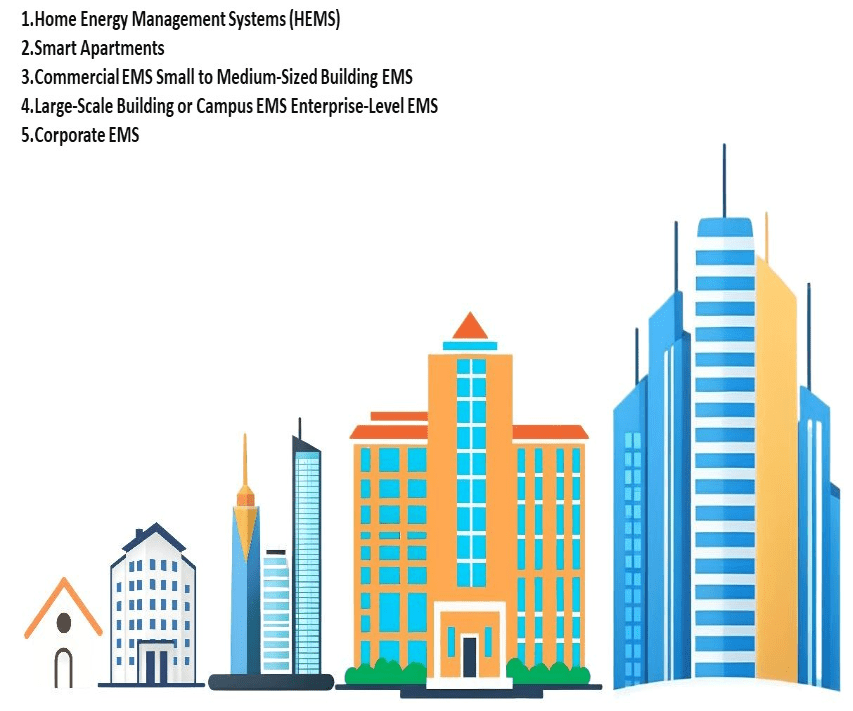
- End Users and Decision-Makers:
- End users are often property owners or developers, tenants, or building managers in residential and small commercial settings. Fewer stakeholders are involved in decision-making than in industrial settings.
- Larger commercial buildings may have dedicated facility managers or building engineers who handle energy management, but they’re less likely to be energy experts.
- Implementation Approach:
- EMS solutions are more standardized in residential and commercial buildings. Scalability and ease of deployment are usually important features of these solutions.
- Building management systems (BMS) are often integrated, but they’re usually less complex and more standardized than industrial control systems, so integration is easier.
- Business Models:
- Resident/commercial EMS providers typically sell or lease hardware and software solutions and provide ongoing monitoring and optimization services.
Home:
There are products available for EMS users at home, but they can also be used for commercial purposes, since the hardware and software do not have to comply with any specific standards.
- Home Energy Management Systems (HEMS):
- Scale: Small-scale, designed for individual homes.
- Target Customer: Commercial and business use of these systems is not permitted.
- Features: The Hardware is plug-and-play, equipped with a free, user-friendly mobile App designed for single-use operation. Various smart home systems can control and integrate some of them. In most cases, no support, maintenance, or complete documentation is included in the package. It’s designed to be affordable.
- Distribution: Primarily direct to consumers through retail channels, online sales, and via partnerships with energy utilities.
- Example : Insignia Connect Wi-Fi Smart Plug
- Description: Meter Analyzer Socket – Connect Wi-Fi Smart Plug. Simple app to monotor and control the plug over internet .
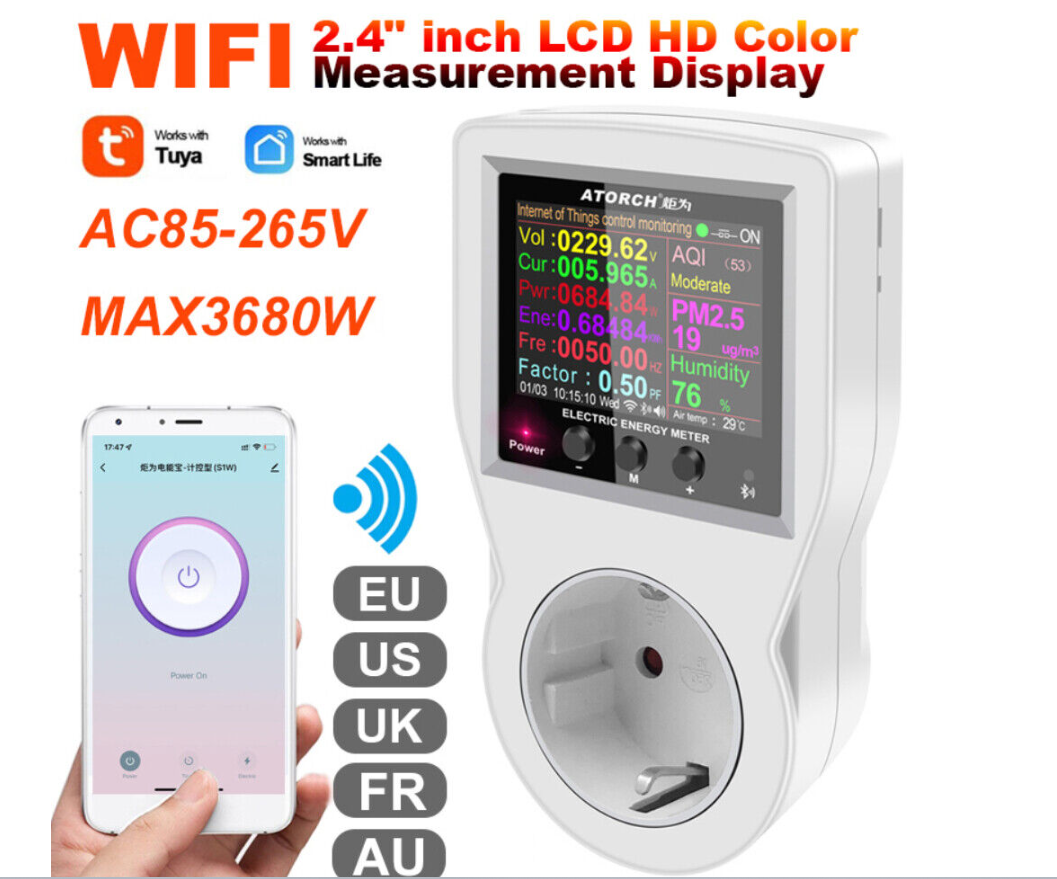
- Description: Meter Analyzer Socket – Connect Wi-Fi Smart Plug. Simple app to monotor and control the plug over internet .
Commercial EMS:
- Small Apartments:
- Target Customer: This group Targets small apartment dwellers without a property manager. These systems are usually installed during renovations or construction by people with limited technical knowledge. The Primary customers are typically sole trader electricians or part of small groups, lacking formal engineering knowledge, who handle installations and setups.
- Scale: Small to medium-sized, designed for multi-unit dwellings. Mostly less than 20 stories
- Features: Despite meeting minimum metering standards, these systems prioritize cost-effectiveness over advanced features, resulting in basic and affordable networking and software components. Because of its focus on simplicity and cost reduction, the package does not include support, maintenance, or complete documentation.
- Distribution: Search engine visibility and word-of-mouth recommendations are the most effective methods of reaching small-scale installers and electricians. Free software packages are being provided by some governments to encourage sustainability.
- Example : Tuya Smart Meter
- Description: Provides smart home technology specifically designed for multi-family units, offering centralized controls for energy management across entire apartment buildings.
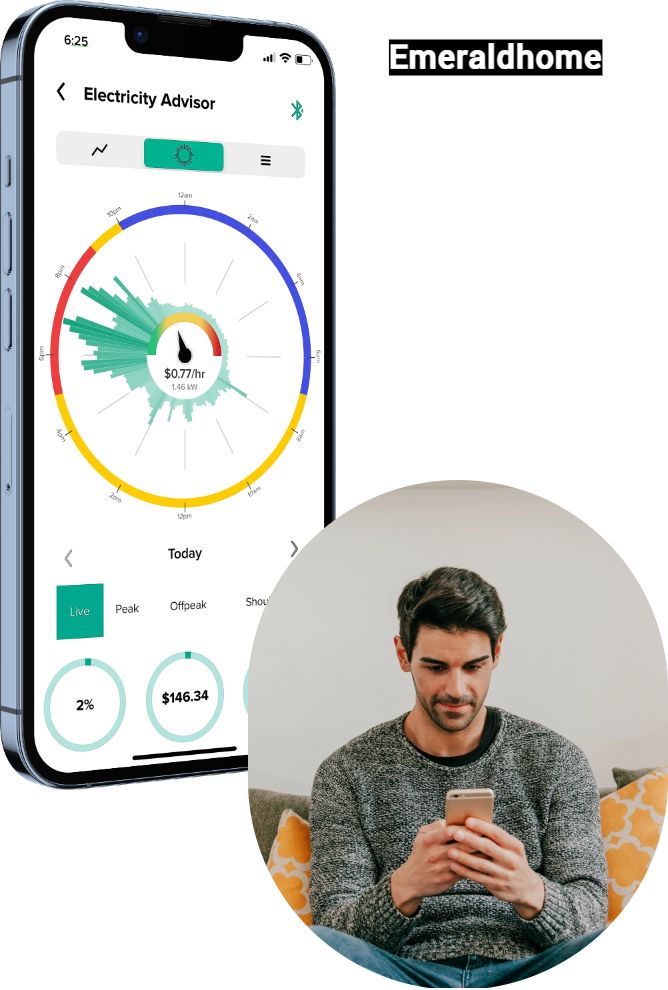
- Description: Provides smart home technology specifically designed for multi-family units, offering centralized controls for energy management across entire apartment buildings.
- Small to Medium-Sized EMS:
- Target Customer: In most cases, this group consists of engineering firms that design and implement building systems and integrate EMS solutions to meet developers’ needs. In addition, property managers are an important segment of the market interested in utilizing EMS post-construction to achieve star ratings.
- Scale: The focus is mostly on standalone buildings, which are not part of distributed systems. Residential, commercial, and communal spaces are often incorporated into these buildings, which require tailored energy management solutions.
- Features: System Compatibility: This EMS category requires a comprehensive solution that combines hardware and software. To meet ongoing certification requirements, these customers are particularly interested in systems that support compliance with environmental rating systems like Greenstar. Maintenance and thorough documentation are essential components. Professional engineering firms capable of handling installations are required to provide technical documentation. Most of the projects are subcontracted, so cost remains a big concern. In facilities without specialized technicians, the systems should have user-friendly interfaces with minimal maintenance requirements. Buyers prioritize systems that can easily integrate with existing BMS.
- Example Company: Schneider Electric EcoStruxure . PowerLogic ION EEM (Energy Efficiency Management).
Example Company: NHP-UWP which is carlogavazzi.dk smart building system- Description: An advanced EMS platform that offers global scale energy management with powerful analytics and reporting tools, designed for multi-site management and enterprise-wide deployments.
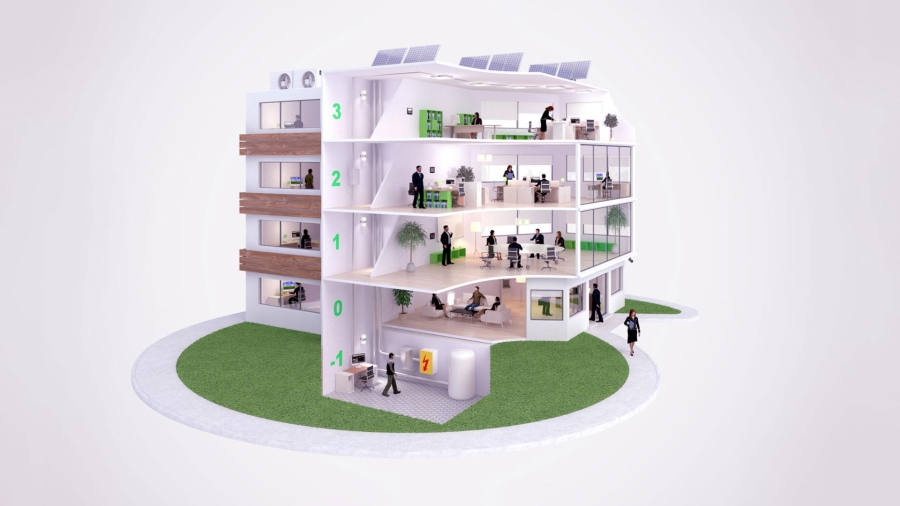
- Description: An advanced EMS platform that offers global scale energy management with powerful analytics and reporting tools, designed for multi-site management and enterprise-wide deployments.
- Medium To Large Scale EMS
- Target Customers: Typically, these buyers are part of larger organizations with strategic goals related to energy efficiency and cost reduction. These EMS categories are used by facilities management teams at universities and multinational construction-real estate and corporate property management companies.
- Scale: Multiple buildings can be managed under a single umbrella EMS solution that can be adapted to a variety of property types.
- Features: In addition to Hardware and Software products, these EMS systems are designed as full solutions encompassing all stages of energy management and scaling. In most cases, they need to be able to integrate seamlessly with different infrastructure across multiple buildings or facilities. The real value for the customer lies in partnering with an EMS company to fulfill the customer’s needs. In order to meet the unique energy dynamics of large complexes and campuses, these solutions must be customized to meet the specific needs of each.
- Example: Siemens Building X (Siemens Building Technologies)
- Description: Provides comprehensive building energy management systems that are ideal for large commercial properties and campuses, featuring extensive customization and integration capabilities. (Developer Portal) (Copenhagen Airport)

- Description: Provides comprehensive building energy management systems that are ideal for large commercial properties and campuses, featuring extensive customization and integration capabilities. (Developer Portal) (Copenhagen Airport)
- Large-Scale Building or Campus EMS:
- Target Customers: Multinational corporations that manage diverse and geographically dispersed facilities are primary buyers of enterprise-level EMS. These teams focus on deploying a custom unified energy management strategy across all operations. Besides government agencies, public sector agencies form a significant customer base, requiring sophisticated systems to manage multiple properties while meeting strict environmental and accountability standards. Energy managers and sustainability officers are crucial stakeholders, tasked with meeting corporate goals on energy efficiency and sustainability. Large organizations like universities, healthcare organizations, and corporate campuses require EMS solutions to manage complex energy demands and support sustainability objectives.
- Scale: This EMS category covers a variety of IoT networking protocols, equipment, and operational requirements for geographically diverse facilities.
- Features: In order to efficiently manage energy across highly distributed properties with varying technological and infrastructure requirements, these systems must be scalable. Advanced Analytics and Alarming to optimize energy consumption and track performance against energy savings goals and regulations. Solutions that can be customized to address the specific energy dynamics of large complexes and campuses are highly valued.
- Example Company: Siemens EnergyIP
- Description: Provides comprehensive energy management systems that are ideal for large commercial properties and campuses, featuring extensive customization and integration capabilities. (climate-neutral campus in Zug, Switzerland. The international headquarters is a showcase project for sustainability in construction and operation as well as digitalization in building technology.)
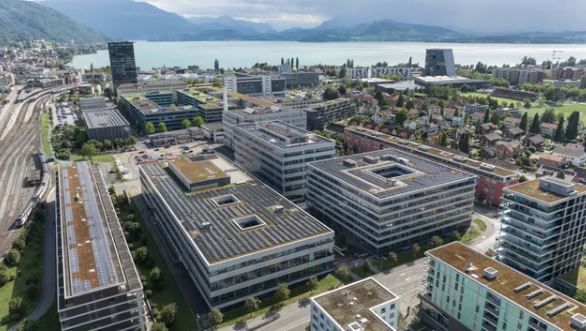
- Description: Provides comprehensive energy management systems that are ideal for large commercial properties and campuses, featuring extensive customization and integration capabilities. (climate-neutral campus in Zug, Switzerland. The international headquarters is a showcase project for sustainability in construction and operation as well as digitalization in building technology.)
| Category | Scale | Target Customer | Hardware | Software | Project | Service After Project Completion | Distribution | Example |
|---|---|---|---|---|---|---|---|---|
| Home EMS | Small-scale, designed for individual homes | Commercial and business use is not permitted | Plug-and-play devices; no specific standards required | Free mobile app, user-friendly interface for single-use operation; basic smart home integration without extensive documentation. | No formal project required; designed for end-user self-installation. | No support or maintenance included; self-service expected post-installation. | Direct to consumers through retail, online, partnerships | Insignia Connect Wi-Fi Smart Plug |
| Commercial EMS (Small Apartments) | Small to medium-sized, multi-unit dwellings | Small apartment dwellers, sole trader electricians | Basic and affordable components; minimal standards met | Software meets minimum metering and basic networking standards; limited to no documentation, typically single-layered and intuitive. | Simple projects; installation may occur during renovations or construction with some technical guidance. | Minimal to no support or documentation; occasional updates or community support might be available. | Search engine visibility, word-of-mouth | Tuya Smart Meter |
| Small to Medium-Sized EMS | Standalone buildings | Engineering firms, property managers | Compatible with various building systems; standard-spec hardware | Enhanced multi-layered software with additional functionality like Alarming, moderate customization, and documented API integration for third-party services. | Defined projects with tailored solutions; typically requiring skilled technicians for setup and implementation. | Professional installation followed by maintenance and support; thorough documentation provided. | Professional engineering firms | Schneider Electric EcoStruxure |
| Medium to Large Scale EMS | Multiple buildings | Universities, multinational companies, property managers | Full solution encompassing various hardware; meets industry standards for integration | Multi-layered software with advanced integration capabilities, supporting diverse infrastructures; well-documented for professional use. | Advanced projects that are customizable to specific property needs; managed by professional teams with technical expertise. | Partnering with EMS company for ongoing support; includes periodic updates and system monitoring. | Tailored approaches for complex properties | Siemens Building X |
| Large-Scale Building or Campus EMS | Geographically diverse facilities | Multinational corporations, government agencies | Scalable across highly distributed properties; custom-spec hardware for diverse operational requirements | Highly sophisticated, multi-layered software with advanced analytics, alarming, and customization options for comprehensive energy management; extensive documentation for complex deployments. | Complex, custom projects with unified energy management strategies; executed by specialized EMS firms and require extensive project management. | Continuous development and dedicated support teams to align with corporate sustainability and efficiency goals. | Customized solutions for specific needs | Siemens EnergyIP |
Niche Market
There are unique opportunities in niche markets in the evolving landscape of Energy Management Systems (EMS). A variety of industries require innovative applications and individualized solutions.
Electrical Vehicle
The EV and CSMS (Charging Station Management System) are pretty mature but it is highly expected that innovative solutions will be required due to insufficient electrical energy supply. (As explained in EVSE post: There were more percentages of EV in 1917 than today). Electric Vehicle (EV) charging station Energy Management Systems (EMS) have grown in popularity, reflecting a sophisticated approach to energy consumption and load balancing. In this niche yet crucial market segment, smart energy solutions are needed to manage the increased demand imposed by electric vehicles on power grids.
Marine Energy Management:
In marine energy management, particularly for marina pedestals, wireless technologies are crucial due to the separation between units, unlike traditional meter cabinets in buildings. Marina pedestals often provide utilities like electricity and water at docking sites and must be disconnected if no vessel is present. Due to this, existing solutions were unable to handle EMS, remote control, and both water and electricity measurements. As pedestals are widely spaced in large marinas, robust and reliable wireless communication solutions are required to maintain connectivity and functionality across expansive aquatic environments.
HVAC EMS:
There are two key differences between HVAC Energy Management Systems (EMS) and traditional EMS markets. HVAC systems typically have metering distributed throughout a building rather than being centralized in a meter cabinet. Second, HVAC systems are often powered by sources other than electricity or gas. Additionally, they often reuse the heat dissipated by compressors – originally designed for cooling -. In comparison with systems that only rely on electrical input, monitoring and managing energy consumption is more complex.
Also, it is surprising that there are no standards in some developed countries, such as Australia, that specifically address these unique aspects of HVAC energy management. As a result of this lack of standardization, traditional EMS providers are hindered from effectively entering the HVAC market, since existing systems and regulatory frameworks do not align with HVAC energy management operational and infrastructure requirements. This gap presents both a challenge and an opportunity, pushing for specialized HVAC energy management solutions.
Data Center
A Data Center Energy Optimization system focuses on developing a tailored Energy Management System (EMS) to handle the significant power requirements of data centers. Many data centers purchase power directly from wholesalers and operate their own substations and distribution networks. The high sensitivity of the data handled by these facilities presents a major challenge for traditional EMS providers. To ensure security, data centers restrict incoming traffic and disallow bidirectional equipment. In addition, these facilities have sophisticated in-house technical expertise, and they prioritize complete control over how and when their data is shared with third-party EMS providers. Due to these stringent data control and security requirements, conventional EMS platforms often cannot function effectively since they require more open data exchange.
DER
Due to its complexity, the Distributed Energy Resources (DER) market remains relatively untapped by traditional EMS players. The term DER refers to a variety of small-scale, distributed energy sources, such as solar panels and geothermal energy systems, etc. Due to integration challenges, regulatory variability, and the need for decentralized decision-making, EMS companies are reluctant to fully enter this sector. This field is being actively researched by organizations like OpenEMS, which consists of a consortium of prestigious European universities. To continually improve energy production and efficiency, these systems require advanced data analytics, adding an additional layer of complexity to traditional EMS providers.
| Topic | Sample Company | Flaw |
|---|---|---|
| EV Load Monitoring | Ampcontrol | No Focus on Load Management |
| Leisure Industry | Seijsener | They are proudly invented / Holland |
| Heat Meter | Kamstrup | No DGP solution / HW and Cloud Product exist |
| Data Center | Stanley Energy | Project-based / confidentiality is high |
| DER | OPENEMS | Too scientific, far from business side |
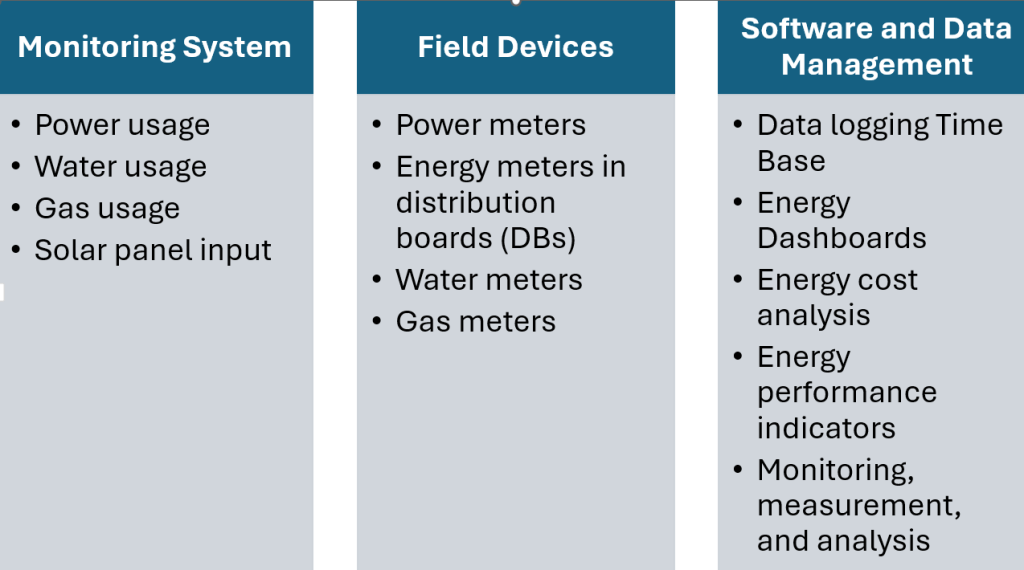
What Is EMS
Energy Performance Indicator
Energy performance indicators (EnPIs) are specific metrics used to measure and track the energy efficiency and performance of buildings, systems, or processes. They provide quantifiable data to assess energy consumption, identify areas for improvement, and monitor progress towards energy-saving goals. Here are some common examples of energy performance indicators:
- Energy Use Intensity (EUI): This measures the total energy consumed per unit area of a building or facility, typically expressed in kWh/m² or Btu/ft² per year. It allows for comparison of energy performance across similar buildings or benchmarking against industry standards.
- Energy Cost Intensity: Similar to EUI, but measures the energy cost per unit area, providing insight into both energy consumption and associated costs.
- Specific Energy Consumption: Measures the energy consumed per unit of production output, such as kWh/ton for manufacturing processes or kWh/guest-night for hotels. It helps identify energy-intensive processes or operations.
- Percentage of Renewable Energy: Tracks the proportion of energy sourced from renewable sources like solar, wind, or biomass, supporting sustainability goals.
- Equipment Efficiency: Measures the energy efficiency of specific equipment or systems, such as boiler efficiency, chiller efficiency, or motor efficiency. It helps identify opportunities for equipment upgrades or maintenance.
- Building Automation System (BAS) Performance: Evaluates the effectiveness of BAS in optimizing energy use through measures like runtime, setpoint adherence, and control loop performance.
- Greenhouse Gas (GHG) Emissions: Quantifies the amount of GHG emissions associated with energy consumption, supporting carbon footprint reduction targets.
These energy performance indicators provide valuable insights into energy usage patterns, enabling organizations to set targets, implement energy-saving measures, and track progress towards their energy management goals.
Distribution – Transmission
Smart Grid: Using information and communication technology, the electric grid gathers and acts on information, such as consumer and supplier behaviour, in an automated manner to improve electricity production and distribution efficiency, reliability, economics, and sustainability.
AMI Advanced Metering Infrastructure is a system that monitors, collects, and analyzes energy usage from advanced devices, such as smart meters, through various communication networks and facilitates two-way communication between utilities and customers. AMI, is a utility-driven infrastructure aimed at enhancing the overall energy distribution, monitoring, and management at the grid level. Example Openway.
OpenEMS
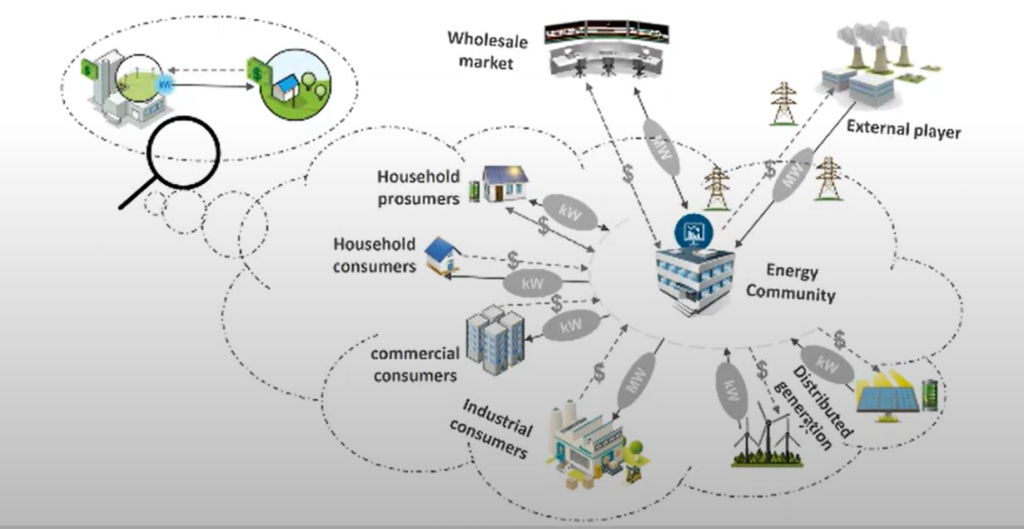
This software focuses on the retail side of the energy market, including aggregators, retailers, and other players, as well as prosumers (producers and consumers).
With OpenEMS, you can connect individual homes with local energy management systems and support decentralized decision-making.
EMS and LEMS
LEMS is a decentralized energy management system that focuses on a specific site, building, campus, or small geographical area, like a neighborhood. LEMS optimizes energy usage locally, reducing costs, and minimizing the environmental impact of energy consumption. OpenEMS focus on LEMS

 Electrical Engineer