

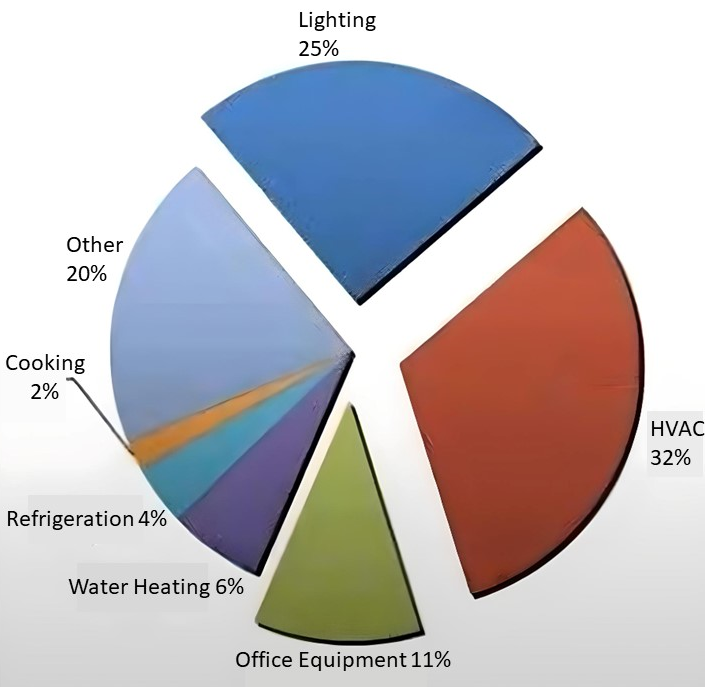
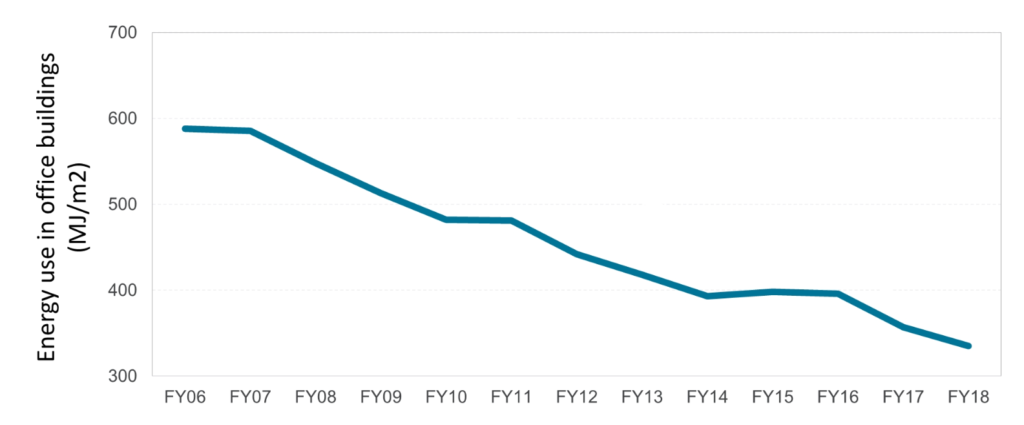
NABERS provides independent energy ratings based on real data, helping you compare your building’s energy use with similar structures. It reduces electricity costs, creates a resilient portfolio, and adds value to shareholders.
NABERS Energy ratings are available for:
- Office Buildings and Tenancies
- Shopping Centres
- Apartment Buildings
- Public Hospitals
- Hotels
- Data Centres
- Residential Aged Care
- Retirement Living
- Warehouses and Cold Stores
- Schools
- Retail Stores
A lot of attention is paid to tenant energy consumption in apartments. There is, however, a possibility that up to 60% of total energy consumption and 25% of administrative fund levies are accounted for by common property.
NABERS Energy rates the common property areas of your strata scheme, including:
- Reception areas
- Stairwells
- Lifts and lobbies
- Car parks
- Gyms, pools, and common areas
- Heating and cooling services
Getting a NABERS Energy rating for your apartment block reduces energy and water bills, lowers carbon emissions, and increases the value of your building.
Tools and Benchmarking Performance: Using operational data instead of theoretical models, NABERS’ Principles provide accurate, real-world assessments of a building’s environmental performance.
With NABERS, building owners and managers can benchmark energy, water, waste, and indoor environmental quality against industry standards.
As a result of this transparent and consistent approach, buildings can achieve sustainability goals, improve efficiency, and contribute to a greener future. NABERS offers an online tool called the NABERS Reverse Calculator, which allows you to estimate your building’s rating by inputting basic energy or water consumption data.
Legislation and Affiliated Programs supporting NABERS help drive environmental sustainability across various sectors.
- Commercial Building Disclosure (CBD)
- Energy Savings Scheme (ESS)
- CitySwitch
- Victorian Energy Upgrades Program
- GRESB (Global Real Estate Sustainability Benchmark)
- Green Star
- NABERS International (NABERS UK, NABERS NZ)
Here’s a step-by-step breakdown of the NABERS Rating Process:
- Data Collection – Gather operational data on energy, water, waste, and indoor environmental quality from the building.
- Assessor Review – A certified NABERS assessor verifies the collected data to ensure it meets NABERS requirements.
- Benchmark Comparison – The building’s performance is compared to similar properties using industry benchmarks.
- Star Rating – Based on the comparison, the building is awarded a star rating from 1 to 6, reflecting its environmental efficiency.
- Certificate Issuance – A NABERS rating certificate is issued, valid for 12 months, providing official recognition of the building’s performance.
Online Platforms for NABERS include:
- Apartment Buildings Online Platform: Designed specifically for rating apartment buildings, allowing users to track energy and water consumption in common areas.
- NABERS Waste Platform: This platform helps users manage and improve waste performance by monitoring waste generation and disposal.
- NABERS Perform: A comprehensive platform for managing energy performance data across various sectors, facilitating the continuous improvement of building efficiency.
Energy sources and supply points refer to the origins and entry points of energy used within a building. These points are crucial for NABERS ratings. These include utility meters for electricity, gas, and water, as well as other sources like diesel fuel or renewable energy systems (OREG). To ensure accurate ratings, all energy supply points need to be identified and included unless there are clear reasons for exclusion. This includes everything from building grid electricity to on-site renewable energy sources. Proper documentation, such as single-line diagrams, verifies supply points during the rating process.
OREG systems are on-site renewable energy sources, like solar panels, that generate electricity and reduce grid dependency, improving its NABERS Energy rating. The Renewable Energy Indicator (REI) shows the percentage of a building’s energy that comes from renewable sources, including on-site generation and off-site purchases like GreenPower®. If LGCs from on-site generation are sold, the energy isn’t counted as renewable in the REI. Buildings can improve their REI by increasing on-site generation or purchasing renewable energy.
Minimum energy coverage refers to the essential areas of a building’s energy consumption included
in a NABERS rating. This is to ensure accurate and fair comparisons. This includes common areas such as lighting, lifts, air-conditioning, and exterior lighting, as well as other base building services like car park ventilation. Any exclusions must be carefully justified and documented during the rating process.
During site verification, assessors use these diagrams to cross-check that all energy sources and supply points are correctly accounted for, ensuring that the NABERS rating includes all required energy uses. If SLDs are outdated or unavailable, assessors may need to create hand sketches based on on-site observations. Proper documentation and verification help maintain NABERS rating accuracy.
Non-utility metering systems refer to meters that are not directly provided or managed by a utility company but installed and operated by the building owner or a third party. These systems track energy or water consumption in specific areas of a building. The main types include:
- Cumulative meters: These track total consumption over time with a permanent reading that increases as more energy or water is used.
- Non-cumulative meters: These provide consumption data for specific intervals without showing a continuous total, making them more prone to missing data if readings are not captured regularly.
- Soft meters: These use sensors to estimate energy use based on electrical parameters like voltage and current but are less accurate.
- Virtual meters: Calculated from data from other physical meters to estimate consumption for parts of a building not directly metered.
Meter validation ensures that the data from non-utility meters is accurate and reliable for use in a NABERS rating. This process involves verifying that the meters are correctly installed, properly calibrated, and functioning as intended. For certain meters, like those using current transformers (CT), validation includes checking that the multiplier matches the actual current and confirming no errors in connection. During a site inspection, assessors physically inspect meters, verify meter numbers, and take manual readings to cross-check against utility bills and diagrams. This step ensures all supply points and energy consumption data are correctly accounted for in the NABERS rating. Clear documentation, including photographs and notes, supports the validation process and helps ensure the accuracy of the assessment.
The objective for NABERS meter validation is to ensure that all non-utility meters are validated and revalidated within 10 years, either incrementally or in batches.
- First Rating: At least 10% of each type of meter needs to be validated.
- Second Rating: At least 50% of each type of meter must be validated.
- Third Rating Onward: 100% of the meters need to be validated.
NABERS validation process for embedded networks involves the following key steps:
- Identification: Assessors must identify all metering points within the embedded network, including parent meters and sub-meters.
- Validation of Meters: Meters within the embedded network need to be validated like other non-utility meters. The same rules apply: 10% of meters are validated for the first rating, 50% for the second rating, and 100% from the third rating onwards.
- Reconciliation: Assessors must reconcile energy use from the embedded network with other energy sources and ensure no unmetered consumption is missed.
- Exclusions: Where appropriate, meters for areas outside the NABERS rating scope (e.g., tenant spaces) can be excluded, but these exclusions must be well-documented.
- Documentation: Detailed records of all embedded network meters, including validation dates and processes, must be maintained as part of the NABERS submission.
Assessor responsibilities include:
- Data Collection and Validation: Ensure accurate collection of data from utility and non-utility meters, and validate the data in line with NABERS rules.
- Site Visits: Conduct thorough site visits to verify the physical setup of the building and its systems, identifying all relevant energy and water sources.
- Documentation: Maintain detailed records of site visits, meter validations, and all other data for audit purposes.
- Compliance: Adhere to NABERS rules and guidelines throughout the rating process, including reporting any issues or discrepancies to the NABERS administrator.
- Continuous Professional Development: Keep up to date with changes in NABERS rules and attend refresher courses as required to maintain accreditation.
Tools for NABERS are designed to assist building owners, managers, and assessors in evaluating and improving environmental performance. These tools include:
- NABERS Reverse Calculator: An online tool that helps estimate a building’s NABERS rating by inputting energy or water consumption data. (Mentioned Before)
- Benchmarking Tools: These tools compare a building’s performance against industry standards to identify areas for improvement.
- NABERS Waste Platform: A tool to track and improve waste management practices by monitoring waste generation and disposal.
- NABERS Perform: A platform for managing and analyzing energy performance data across different sectors, helping improve building efficiency.
- Spreadsheets: Sector-specific spreadsheets (e.g., for hospitals) used to input and manage detailed data for NABERS ratings.
NABERS rules ensure consistency, accuracy, and transparency in the assessment process. These rules cover several key aspects.
- Minimum Coverage: NABERS ratings must cover all significant energy and water use areas within the building, including common areas like lighting, heating, and cooling systems. Minimum coverage for NABERS ratings refers to the essential areas and systems of a building that must be included in the assessment to ensure an accurate and comprehensive rating.
- Common Areas: Lighting, lifts, and shared spaces like lobbies, stairwells, and hallways.
- Heating, Ventilation, and Air Conditioning (HVAC): All energy used for heating and cooling the building, including central systems and local units.
- Car Parks: Energy used for lighting, ventilation, and other systems in car park areas.
- Water Services: Water used for cooling towers, domestic water use, and irrigation systems.
- Other Building Services: Includes systems such as pumps, security, and fire protection that are critical to the building’s operation.
- Rating Period: The assessment period is based on 12 months of consecutive data to provide a representative view of the building’s performance.
- Data Accuracy: Only verified and accurate data can be used for ratings, with strict requirements for meter validation and data collection.
- Exclusions: Specific areas, like tenant spaces, can be excluded from the rating, but these exclusions must be justified and documented.
- Renewal: NABERS ratings are valid for 12 months, after which buildings must be reassessed to maintain their rating.
Key aspects of the NABERS Audit process include:
- Data Verification: Reviewing source data such as utility bills, meter readings, and other documentation to ensure the accuracy of the figures used in the rating.
- Site Inspection Review: Confirming that the site inspection was conducted according to NABERS guidelines and that all relevant energy-consuming areas were accounted for.
- Compliance Check: Ensuring that any exclusions or adjustments made during the rating process are justified and documented in line with NABERS rules.
- Audit Outcomes: If any discrepancies are found, the assessor may be required to make corrections before the rating is finalized. In some cases, a rating can be suspended or invalidated.
Remote meter reading systems
Remote meter reading systems (RMRS) must be properly configured and periodically checked to confirm the system interprets and reports the meter data correctly. The NABERS metering validation process requires that cumulative meter readings reported by the RMRS over a nominal period corresponds to cumulative meter readings directly at the meter.
NABERS requires non-revenue (non-utility) meters to be read at least as often as revenue (utility) meters. This ensures that data can be correlated and analysed to ensure it makes sense.
NABERS does not specify an accuracy class for meters, nor does it recommend or certify products. Claims that meters are NABERS-compliant are self-made and not verified by NABERS. NABERS does require metering systems to be checked, corrected and recalibrated when the NABERS metering validation process reveals a disparity of 10% or more.
NABERS metering issues
To obtain a NABERS Energy rating, data on the facility’s energy consumption must be collected. This can be done using monthly energy bills for the 12 months leading up to the assessment or through interval data from revenue (utility) meters. Non-revenue (non-utility) meters can also be used, but they must comply with NABERS Rules for Collecting and Using Data and undergo a validation process.
Cumulative vs. Instantaneous Metering:
- Cumulative metering is required for NABERS ratings:
- Records and transmits a running total of energy consumption.
- Offers better accuracy as energy consumption is calculated within the meter.
- Resilient to data collection system failures since it continues tracking energy consumed.
- Instantaneous metering is not acceptable:
- Provides momentary readings without a running total.
- Susceptible to data loss, leading to inaccuracies in calculating total energy use.
Metering Validation:
- Validation ensures meters are accurate and meet NABERS requirements:
- Direct-connected meters without remote reading do not require validation.
- Meters with current transformers (CTs) require validation.
- NABERS validation rules:
- Initial validation within 3 years of meter installation.
- Ongoing validation every 10 years.
- Validate 10% of meters annually, ensuring all meters are validated within 10 years.
- Delayed validation can postpone NABERS rating certification.
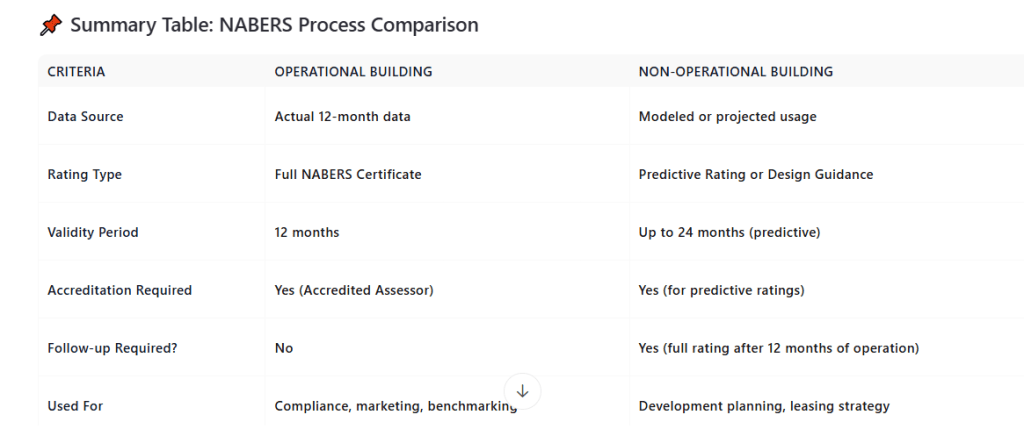
NABERS rating process differs significantly between:
Non-operational (new or under construction) buildings and
Already occupied (existing operational) buildings
For newly constructed buildings, the NABERS-based verification method does not rely on post-occupation measurement data. Instead, it uses a predictive energy modelling approach based on the NABERS protocol. Here is how it works.
- Energy Modelling at Design Stage: The building’s design is modelled using the NABERS Energy protocols and tools to predict its likely operational energy use, as if it was rated under NABERS after completion.
- Commitment Agreement: The developer/owner enters into a NABERS Energy Commitment Agreement, which contractually obliges the design, construction, and commissioning of the building to achieve a specified NABERS rating (typically at least 5.5 stars for base building energy efficiency).
- Verification: Compliance with the NCC is demonstrated if the modelled energy use predicts performance better than a set threshold (e.g., less than 67% of the emissions of a 5.5-star building, which is roughly equivalent to a 6-star NABERS rating).
- Independent Review: The modelling and Commitment Agreement are subject to independent review as part of the NABERS process1.
Commitment Agreements
As part of the Commitment Agreement process, you’ll need to engage a member of the Independent Design Review Panel to conduct a review of your design documentation and model.
Bridging Design and Operation: The process ensures a contractual and procedural link between design intent and operational outcomes, incentivizing follow-through during construction and commissioning.
Predictive, Not Retrospective: While NABERS ratings for existing buildings are based on measured data, the NCC verification method uses the same NABERS framework for predictive modelling at the design stage.

 Electrical Engineer