
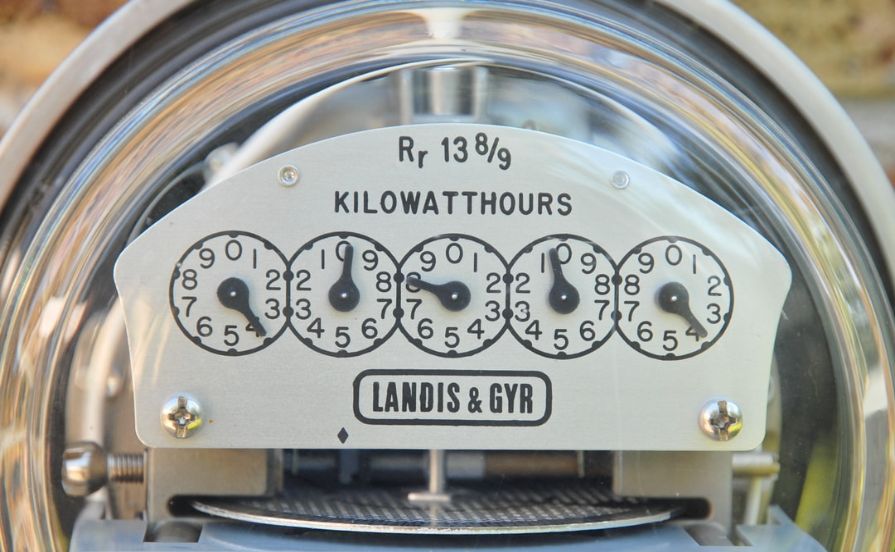
Meters
Meters are an important part of both the retailer and distribution networks, as they track electricity usage for billing and grid management. However, not all meters are used within these networks
AEM (Authority Electrical Meter / Retailer Side / Utility Meters) is a type of electrical meter used to measure, monitor, and manage electricity usage in buildings. It records the amount of electricity consumed by the user and is then transmitted to the local municipal authority that provides the electricity. The AEM also records the amount of electricity used in its various forms, such as peak, off-peak, and regular usage. The data recorded by the AEM is also used to calculate the electricity tariff and the charges associated with using electricity at various rates. (Sample)
EM / Check Meters (Power Client Side) Private electrical meters (also known as private power meters) are used to measure, monitor, and control the electricity usage in a private residence or building. In contrast to public or authority meters, private power meters are owned and operated by the home or business owner instead of being provided and operated by the electricity provider. These are meters installed to compare and verify the readings of the main meters. As a backup, it ensures accurate electricity, water, and gas measurements. In billing disputes or to monitor the performance of the main meter, check meters are commonly used for independent verification of consumption data.
Meter accuracy classes are independent of their location. Class indicates accuracy in meters. Class 1.0 meter is the most widely used for household and basic industrial and commercial electricity metering. Industries requiring high accuracy will choose meters above class 0.5S. Many manufacturers develop class 1.0 meters as the primary meter.
Power meter accuracy class 1 means that the meter will read power values within +/- 0.5% accuracy compared to a reference standard.
Meter Type
MFM or multifunction meter is an energy meter that can measure multiple parameters beyond just the amount of power consumed. For example, a multifunction meter might include voltage, current and power monitoring functions. Normal meters are limited to measuring the amount of power consumed by a particular device or system. They do not provide the additional information that multifunction meters can provide.
MEM (Mechanical Electrical Meter) is an electrical meter that measures electrical energy consumption through physical movement. It tracks the amount of power a customer uses and can be used to calculate the resulting electricity tariff. The main parts of the MEM include a wheel, dials, levers, and other mechanical components. The mechanical parts are connected to feedback coils, which generate a voltage that can be read and transmitted for analysis. This type of meter is accurate and reliable but can be affected by external factors such as weather or dust.
Smart and MRIM: If you don’t have a smart meter, your distribution company will read your meter manually. This typically occurs every three months. If you have a Manually Read Interval Meter (MRIM), it will record and store your usage daily.
WAGES (Washtenaw And Genesee Electric System) is a specialized metering system that measures electrical usage from various sources, including solar, residential, commercial, and industrial. It is designed to give customers real-time insight into their energy consumption, enabling them to make more informed energy decisions. Additionally, WAGES meters can produce energy usage data compliant with international standards and local regulations.
Meter classification based on NSW Guide
- Electricity billing meters – meters that are pattern-approved by the Australian Government National Measurement Institute for trade use.
- Basic power meters – cost-effective multifunction electronic meters with a digital display and the ability to output data to a logger.
- Power quality meters
- Soft meters – equipment sensors, e.g chilled water temperature ; fan speeds; VFD
- Virtual meters – Measure without the use of physical metering. e.g if there are 3 loads in a circuit then (Load 3 meter; Virtual meter) = (Master meter – Meter for Load 1 – Meter for Load 2)
Australian Standards for metering
The primary standards for metering systems are:
- AS 1284.1-2004: Electricity metering – General purpose induction watthour meters
- AS 62052.11-2005 (R2016): Electricity metering equipment (AC) – General requirements, tests and test conditions – Metering equipment
- AS 62052.21-2006 (R2016): Electricity metering equipment (AC) – General requirements, tests and test conditions – Tariff and load control equipment
- AS 62053.21-2005 (R2016): Electricity metering equipment (AC) – Particular requirements – Static meters for active energy (classes 1 and 2)
- AS 62053.22-2005 (R2016): Electricity metering equipment (AC) – Particular requirements – Static meters for active energy (classes 0.2 S and 0.5 S)
- AS 62053.23-2006 (R2016): Electricity metering equipment (ac) – Particular requirements – Static meters for reactive energy (classes 2 and 3)
- AS 60044.1-2007 (R2016): Instrument Transformers – Part 1 Current transformers (IEC 60044-1 Ed.1.2 (2003) MOD)
- AS 60044.2-2007 (R2016): Instrument Transformers – Part 2 Inductive voltage transformers (IEC 60044-2:Ed.1.2 (2003) MOD).
CT Current Transformer
The three main shapes of current transformers are:
Wound Current Transformer
Toroidal Current Transformer
Bar Type Current Transformer
CT based on their shape
-Window-type CT
-Bar-type CT
-Ring-type CT
-Clamp-type CT
-Split-core CT
-Toroidal-type CT
IEC 62056-21
IEC 62056-21, previously known as IEC 61107 or sometimes just IEC 1107, is an international standard for a computer protocol designed to read utility meters. This protocol allows for the exchange of data over various media, including the Internet. It supports the transmission of data in ASCII format (in modes A to D) or HDLC (mode E) from a meter to a nearby hand-held unit (HHU) using a serial port connection.
IEC 62056-21 falls under the umbrella of DLMS as a specific standard for local data exchange
AS 62052.31:2017
AS 62052.31:2017 is a critical safety standard that meters must meet to comply with Australian regulatory requirements for electricity metering equipment. This standard specifies product safety requirements for AC electricity meters, including tests to ensure equipment is safe under normal, extended, and extreme environmental conditions. It incorporates essential requirements from IEC 62052-31:2015, with additional modifications for Australian conditions, such as increased durability at higher temperatures, electrical insulation demands, and safety considerations for high lightning risk areas.
Meters installed in Australia, especially advanced meters used in the National Electricity Market (NEM), must comply with AS 62052.31:2017 to address these safety aspects, including protection against electrical shock, fire, mechanical stresses, and environmental factors. Compliance ensures the meter’s safe and reliable operation in public electricity distribution networks in line with Australian regulatory standards.
NER – Chapter 7
In Chapter 7, the National Electricity Rules (NER), entities involved in metering are outlined. The National Electricity Rules (NER), particularly Chapter 7, govern roles and responsibilities for entities involved in metering—such as Market Participants, Metering Coordinators, and the Australian Energy Market Operator (AEMO). These rules mandate that each metering installation meets specific accuracy standards. It
records both active and reactive energy data as applicable, and is equipped with secure remote access if required. Regulations also cover data management, emphasizing data integrity, secure processing, and access control to protect customer and market data. Additionally, the NER provides for special conditions, such as exemptions for areas without telecommunications infrastructure and options for customers to refuse smart meter installations. These guidelines establish a robust regulatory framework to uphold reliability, transparency, and fairness in the energy metering processes across the NEM.
AS 62053.21:2023
AS 62053.21:2023 standard establishes the requirements for static watt-hour meters used in measuring alternating current (AC) active energy, specifically for accuracy classes 0.5, 1, and 2. This standard focuses on type testing for meters that operate at 50 Hz or 60 Hz. It applies primarily to devices designed for voltage levels up to 1000 V in electrical networks. It outlines the necessary performance and accuracy tests, as well as installation and functional specifications.
Key requirements in AS 62053.21 include standards for:
- Accuracy: Ensuring meters meet specific percentage error limits, which vary based on class and current levels.
- Durability: Enabling meters to withstand environmental influences like temperature variation, humidity, and electromagnetic fields.
- Construction: Ensuring that all functional components are housed within a single case, although displays may be separate.
The standard references IEC 62052-11:2020 for general requirements, which apply to metering equipment performance and durability, and IEC 62052-31:2015 for safety requirements. Additionally, it includes Appendix ZZ, specifying variations tailored to Australian compliance. This standard does not cover safety specifics or anti-tampering measures, deferring safety guidelines to IEC 62052-31.
Meter accuracy classes
| Class | Accuracy at Normal Load | Use | Australian Standard |
|---|---|---|---|
| 0.2s | +/- 0.3% | High accuracy revenue-grade applications | AS 62053.22-2005 |
| 0.5s | +/- 0.6% | Medium accuracy revenue-grade applications | AS 62053.22-2005 |
| 0.5 | +/- 0.8% | Large business revenue-grade and accurate submetering applications | AS 62052.11-2005 |
| 1 | +/- 1.0% | Medium accuracy submetering applications | AS 62052.11-2005 |
| 1.5 | +/- 1.5% | General purpose accumulative metering applications | AS 1284.1-2004 |
| 2 | +/- 2.0% | Low accuracy submetering applications | AS 62052.11-2005 |
Metering Installation Types
The National Electricity Rules (NER) indeed specify different types of metering installations, which are categorized based on their characteristics and accuracy requirements. These metering installation types are numbered from 1 to 7.
- Type 1 to 4: These are generally used for larger consumers or generators and require more sophisticated metering equipment.
- Type 5: This type includes interval meters that can record energy consumption in short time intervals.
- Type 6: This installation includes basic accumulation meters that record the total energy consumed over time. It must have facilities capable of continuously recording the total accumulated energy supplied through it.
- Type 7: This is a unique category that doesn’t require a physical meter to measure electricity flow. It’s used in situations where the energy consumption can be estimated or calculated based on known factors.
Seven Metering Installation Types in the National Electricity Rules
- Type 1 Metering Installation:
- For high-consumption sites (e.g., large-scale industrial facilities).
- Requires the highest level of accuracy and advanced features.
- Type 2 Metering Installation:
- Used for large commercial facilities with significant electricity use.
- High accuracy but slightly less stringent than Type 1.
- Type 3 Metering Installation:
- Applies to medium-scale commercial applications.
- Measures consumption for three-phase systems without requiring the precision of Type 2.
- Type 4 Metering Installation:
- Digital meters capable of remote reading (smart meters).
- Designed for residential and small business consumers.
- Type 5 Metering Installation:
- Interval meters for smaller-scale businesses.
- Requires manual meter reading.
- Type 6 Metering Installation:
- Basic accumulation meters for residential use.
- Cannot record detailed interval data; only provides total usage over a period.
- Type 7 Metering Installation:
- For unmetered supplies, such as public lighting or small installations.
- Usage is estimated rather than measured.
Key Aspects of Metering Installations
- Accuracy Requirements: Each type of metering installation has specific accuracy requirements as outlined in Schedule 7.4 of the NER47.
- Responsible Parties: The Local Network Service Provider may act as the responsible person for Types 5, 6, and 7 metering installations, subject to certain conditions and agreements with Market Participants1.
- Data Collection: Different types of installations have varying capabilities for data collection and reporting. For example, Type 5 installations must extract interval energy data when the annual electricity flow exceeds a certain boundary1.
- Regulations: The accuracy of Type 6 metering installations must comply with regulations issued under the National Measurement Act or relevant jurisdictional requirements5.
Meters for billing
Electricity regulation differs depending on whether a meter is used for trade or nontrade purposes.
Any meter used for trade purposes (understood to be for a transaction or other billing purpose) must have been granted ‘pattern approval’ by the National Measurement Institute of Australia and must be verified. Pattern approval determines the quality of a measuring instrument. It is a process whereby an impartial body examines the pattern (design) of an instrument prototype against a published national standard.
- On-market revenue metering:
Electricity metering used by a customer participating in the national electricity market for the supply of electricity to a facility, defined as ‘revenue metering’. ‘revenue metering’, must conform with the requirements set out in the National Electricity Rules - Off-market trade-use metering
In cases where tenants are charged separately for their energy use as part of their monthly lease payments, this setup is called “off-market” because the tenants themselves are not directly buying electricity from the National Electricity Market (NEM). Instead, the building owner or manager purchases the electricity and passes the cost to the tenants. - Embedded Network: An embedded network is a private electricity network located within and connected to the main distribution network. In both Embedded Network and Off-market , the end users (e.g., tenants or customers) do not directly purchase electricity from the National Electricity Market (NEM). Instead, the owner or operator of the building or network buys the electricity from the grid and redistributes it. However, there are some differences below the table:
| Aspect | Off-Market | Embedded Network |
|---|---|---|
| Scope | Applies to smaller setups, like a single building (e.g., an office or apartment building where tenants are billed for energy as part of their rent or a separate line item). | Larger networks serving multiple premises, such as shopping centers, multi-residential complexes, or universities. |
| Regulation | Transactions are off-market and relatively simple. Pattern-approved meters are required for accurate billing. | Heavily regulated, especially after the 2017 rules. Embedded Network Managers (ENM) are required to allow customers access to the NEM. |
| Market Participation | The end users (tenants) do not interact with the electricity market at all. | Customers within the embedded network can now opt to become on-market customers, meaning they can choose their own electricity retailer while remaining physically connected to the embedded network. |
| Metering Requirements | No National Metering Identifier (NMI) is required. Only pattern-approved meters are mandatory. | Requires NMIs for each customer meter to facilitate market access and consumption data reporting to the Australian Energy Market Operator (AEMO). |
Multi-Customer Metering Systems
The “multi-point meter” is a high density electrical meter with several customer metering points on one meter. The Key Features of Multi-Customer Metering Systems include high-density metering, scalability, and advanced communication capabilities. High-density metering allows for the monitoring of multiple circuits or tenants using a single metering unit, streamlining the process and reducing the need for multiple devices. Scalability ensures that the system is suitable for properties of varying sizes, from small to large, and can adapt to the number of tenants or circuits as needed. Additionally, the communication capabilities of these systems enable real-time data transmission and remote monitoring, enhancing overall efficiency and management.
NOT Low Voltage
LGC stands for Large-scale Generation Certificate, which is created for every megawatt-hour (MWh) of eligible renewable electricity generated by accredited power stations (such as large solar, wind, or hydro systems).

 Electrical Engineer