
Is metering and monitoring beneficial?
1. Efficiency and Fault Detection
- Get insight into equipment performance.
- Optimize processes and allocation of resources.
- Detect drift in equipment performance and component failure
2. Save Energy, Money, and Time
- Identify and eliminate energy waste.
- Reduce energy bills and operational costs.
- Automate reporting to save time on manual data collection and analysis.
3. Regulatory Compliance
- Comply with energy management and building codes.
- Avoid penalties.
4. Enhance Property Value
- Increase property value by improving facility performance.
- Attract tenants and investors with commitment to efficiency and sustainability.
5.Sustainability
- Achieve sustainability goals by lowering carbon emissions and energy waste.
- Contribute to global environmental efforts
6.Unlock Opportunities for Improvement
- Use data insights to find areas for improvement.
- track progress, and demonstrate measurable improvements.
Steps to implementing electricity metering and monitoring at your site

Step 1 – Set your goals:
What do you want to acheive: e.g.
– Manage energy costs and wastage
– Track and improve your NABERS rating
– Understand your costs of operations
– Better allocate costs to tenants
– Improve asset management
– Identify energy saving opportunities
– Evaluate energy savings
– Create energy savings certificates
Step 2 – Understand your current situation
– Review and understand your annual electricity
– Understand electricity infrastructure, and authorized to read data from them or not.
– Identify gaps by review existing audits
– Identify Existing BMS or SCADA systems
– Update your inventory of plant and equipment


Step 3 – Investigate costs
– Budget considerations; Once you have an idea of why you want to implement electricity metering and monitoring
Step 4 – Investigate and choose solutions
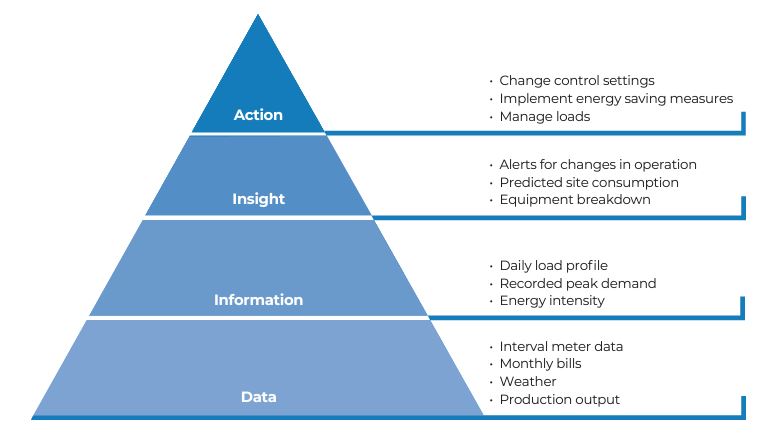
– Metering only has value if the data it provides can translate into meaningful and actionable feedback.
– Data presentation formats e.g Online; Realtime; email report; mobile app etc
– Specify what you need * figure 8

Step 5 – Develop a business case
Formulating a compelling business case that sets out the costs, benefits and risks is the key to winning support for the system from senior management and other stakeholders.
– Define Budget, Goals, what report, who will be responsible etc.
– Quantify potential savings
Step6: Implement monitoring system
– Guide at Link
– Procurement, Installation, Commissioning, Operation
Step 7: Monitor and review performance
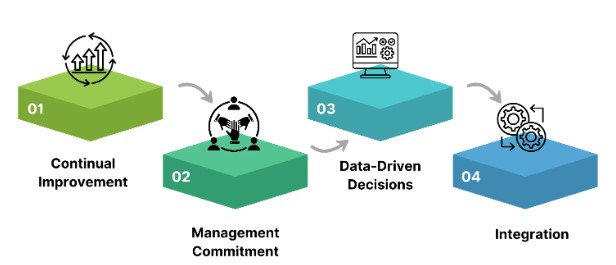
– Adoption of a system e.g. ISO 50001, NABERS, etc.
Step1: Being specific will help you determine the success of the project. It will also help you keep the procurement process focused on obtaining a system that meets your needs.
Step2: Analyze electricity usage, locate existing meters, review energy audits, and understand facility infrastructure through single-line diagrams and equipment inventories.
Step 3: Determine expenses, including hardware, software, installation, data collection, and ongoing maintenance. Budget for all associated costs, including training.
Step 4: Identify data needs, choose appropriate metering hardware, evaluate data platforms, and decide on data storage (on-site, cloud, or third-party
Step 5: Justify the project based on energy savings, cost recovery, and compliance benefits.
Step 6: Install metering systems, integrate them into data platforms, and ensure proper commissioning with trained personnel.
Step 7: Continuously analyze data, identify inefficiencies, verify compliance, and improve processes based on insights.
More about cost
| Costs | Description |
|---|---|
| Project Management | Even if there is a single contract for supply and installation. |
| Equipment and Installation |
|
| Maintenance and Validation |
|
| Data Collection and Storage |
|
| Ongoing Data Analysis and Reporting | Procedures, systems, and people to interpret and use the data acquired from the electricity metering and monitoring system. |
| Training and Allocation of Responsibility | Training is often undervalued, underfunded, or, at worst, forgotten. Unless staff receive adequate training on the use of the system, the data may not be used, and many of the projected savings may not be realised. |
The following is a rough estimate of the cost of each item. Please note that the prices below are just averages and depend on so many other parameters like the size.
| Item | Cost per Unit |
|---|---|
| Basic meter | $200 – $800 |
| Power quality meter | $1000 – $5000 |
| High accuracy billing meter | $2000 – $5000 |
| Solid core current transformer | $20 – $500 |
| Networking equipment (total) | $2000 – $10,000 |
| Installation (per meter) | $500 – $3000 |
| Software or online platform annual subscription fees (per device) | $100 – $300 |
| Software or online platform subscription fees (set-up price) | $1000 – $2000 |
| Action | Typical Energy Savings | Savings Mechanism |
|---|---|---|
| Installation of meters only | 0 to 2% | Awareness that consumption is being monitored; savings not likely to persist |
| Enhanced billing and allocation | 2 to 5% | Improved awareness, ongoing |
| Feedback on consumption and facility tune-up | 5 to 15% | Improved awareness, and identification of opportunities for simple operational and maintenance improvements |
| Real-time feedback and continuous commissioning | 15 to 30+% | Improved awareness, identification of opportunities for simple operational and maintenance improvements, implementation of energy efficiency projects with verified results, continuing management attention |
More about what you need
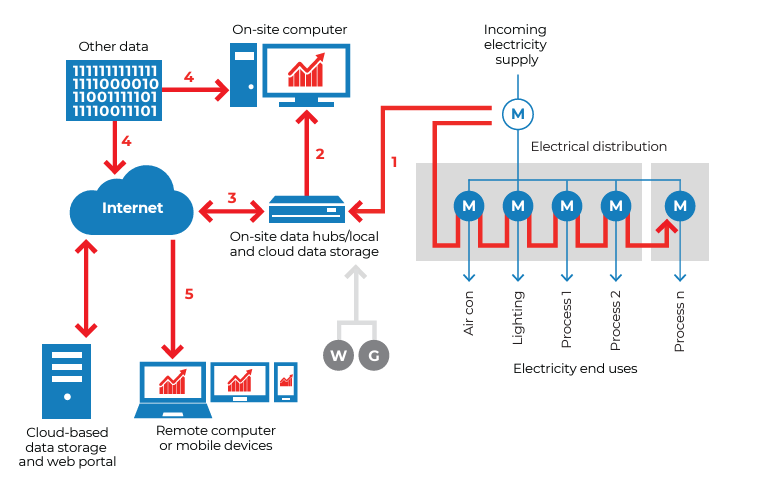
- SMART Meter: A smart meter is a meter that communicates, meaning it can send and receive data about energy usage. (1)
- On-Site Equipment: The local (on-site) equipment refers to any equipment that is used on site to centralize data. This includes networking equipment like switches, as well as hardware used to centralize data, like edge devices and required EMS software. (2)
- Cloud or Remote : Refers to services and resources, like storage or software, hosted online
instead of on local equipment. End users simply access and use these services without managing the underlying hardware or infrastructure. (5) - Data Integration: Data integration is the process of reading and storing data from sources other than energy meters. As part of the energy meter, water and gas are included. (4)
Analyzing the data
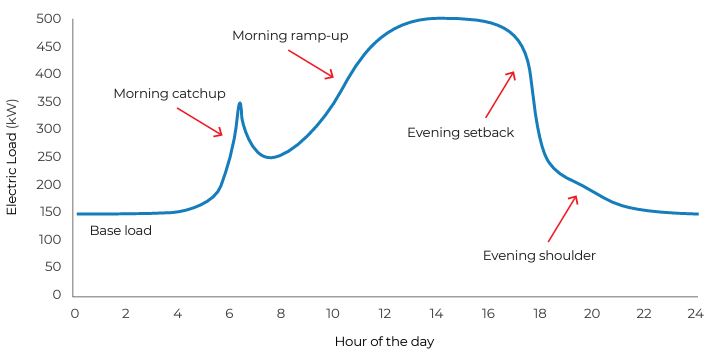
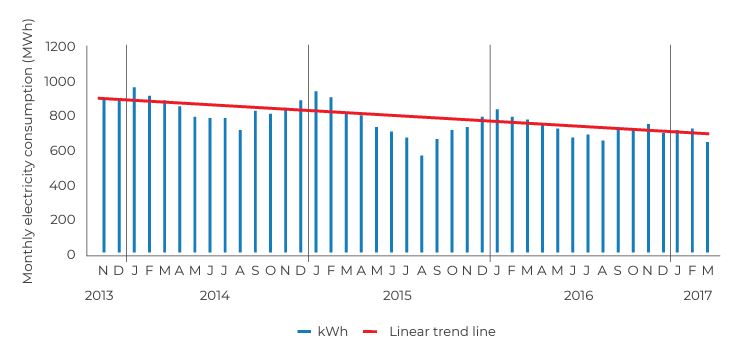
Detailed analysis of energy data often requires specialized expertise and goes beyond the scope of this post. Also third-party services are often used for this purpose by organizations. However, understanding how to interpret energy data is crucial to making informed decisions. Common visualization methods include hourly load profiles to track energy use patterns. Seasonal, monthly, and daily variations to identify trends. Equipment or circuit-level monitoring to pinpoint specific inefficiencies. Regression analysis can also provide deeper insights by correlating energy usage with variables like production levels or weather conditions. These tools can transform raw data into actionable insights, helping businesses optimize energy management strategies.
Responsibility
The use of information from an electricity metering and monitoring system can vary widely across facilities
| Application | Potential Users | Good Results | Poor Results |
|---|---|---|---|
| Energy meter billing reports |
|
|
|
| Analytics and diagnostics and fault detection |
|
|
|
| Corporate sustainability reporting |
|
|
|
Metering to improve energy efficiency
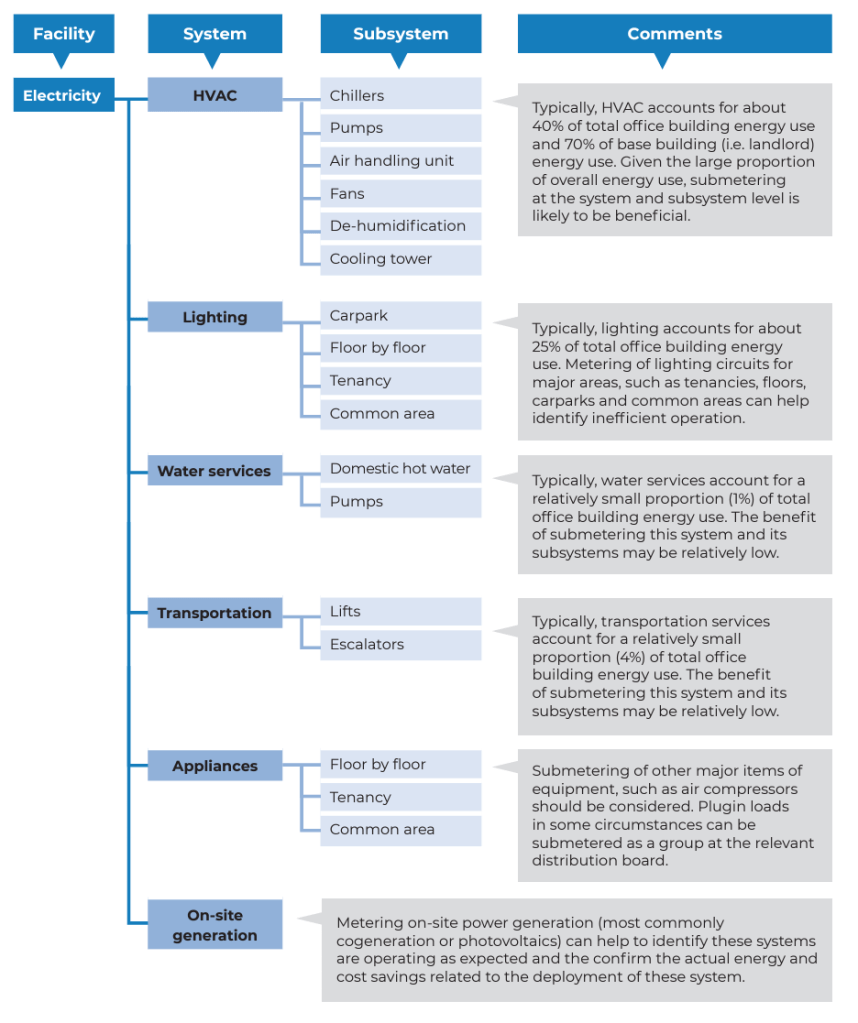
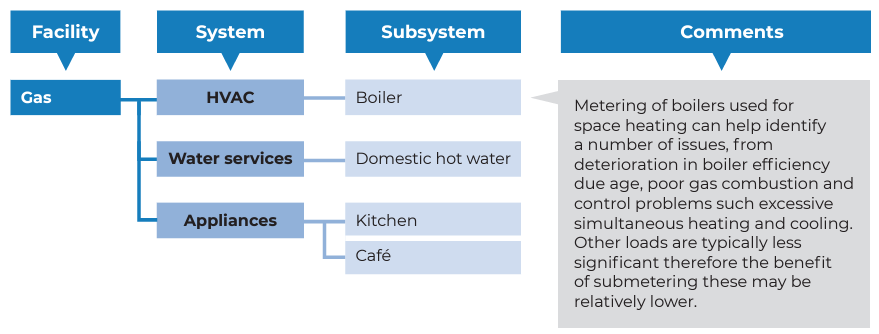
When aiming to improve energy efficiency, a metering and monitoring system should provide sufficient evidence to identify avoidable energy wastage without requiring costly and time-consuming investigations. A facility can be analyzed as a collection of interconnected energy-consuming systems, each further divided into subsystems. The level of metering required depends on the facility’s complexity, size, and the desired level of insight into energy usage.
- Facility-Level Metering:
- Suitable for small facilities with only a few pieces of equipment and well-understood loads.
- Provides a general overview of the facility’s total energy consumption.
- System-Level Metering:
- Captures general energy usage trends for major systems, such as:
- Heating, ventilation, and air conditioning (HVAC)
- Lighting
- Water services
- Helps in understanding the energy contribution of each system to the overall consumption.
- May lack accuracy when equipment is not connected to a common distribution board.
- Captures general energy usage trends for major systems, such as:
- Subsystem-Level Metering:
- Involves direct metering of individual pieces of equipment.
- Provides the greatest level of detail and insight into energy usage.
- Minimizes the need for detective work when analyzing energy consumption.
- Prioritize Submetering for Significant Loads:
- Meter individual loads that exceed 20kVA (19kW at 0.95 power factor), as recommended by the Green Building Council of Australia.
- Alternatively, focus on equipment consuming more than 10% of total energy consumption, in line with the Australian Standards for energy audits (AS/NZS 3598.1:2014 and AS/NZS 3598.2:2014).
Example:
By adopting the appropriate level of metering, facilities can better understand their energy consumption patterns, identify inefficiencies, and implement targeted strategies for improvement.
NCC J9D3
When it comes to J9D3 meter requirements, the classification depends on floor area. Meters serving areas larger than 2,500 square meters must be part of an EMS (Energy Management System), meaning they are not standalone meters. For areas between 500 and 2,500 square meters, a memory meter capable of logging metering data is required; for example, the PMC-340B is commonly used as a memory meter. For buildings with areas less than 500 square meters, the PMC-340A is an example of a meter that is identical to the PMC-340B but lacks memory functionality. It is crucial to understand that the National Construction Code (NCC) has no connection to billing.

 Electrical Engineer