
Safety laws, including the guidelines in AS/NZS 3000:2007, are designed to protect against electrical risks that can lead to serious outcomes like death, shock, or injuries. These risks often come from direct or indirect exposure to electricity and can result in electric shocks, fires from electrical faults, or dangerous conditions such as arcing or explosions. Other important risks include electric shocks from “step-and-touch” potentials and exposure to toxic gases released during electrical incidents, which can cause illness or fatality. The most common electrical risks and injury causes are:
- Electric shock causing injury or death.
- Fire (such as resulting from an electrical fault), arcing or explosion causing burns.
- Electric shock from ‘step-and-touch’ potentials, and toxic gases causing illness or death.
Electrical safety legal frameworks typically encompass legislation applied uniquely to each state or country, reflecting local requirements and contexts. Australia’s electrical safety is governed by:
- The Electrical Safety Act: Establishes the legal obligations and duties for electrical safety, providing the overarching framework for managing risks.
- The Electrical Safety Regulation: Specifies the detailed requirements and technical standards needed to comply with the Act, such as workplace practices, equipment standards, and licensing.
- Codes of Practice and Guides: Provide practical advice and examples for meeting Act and Regulation requirements, offering industry-specific guidance on best practices.
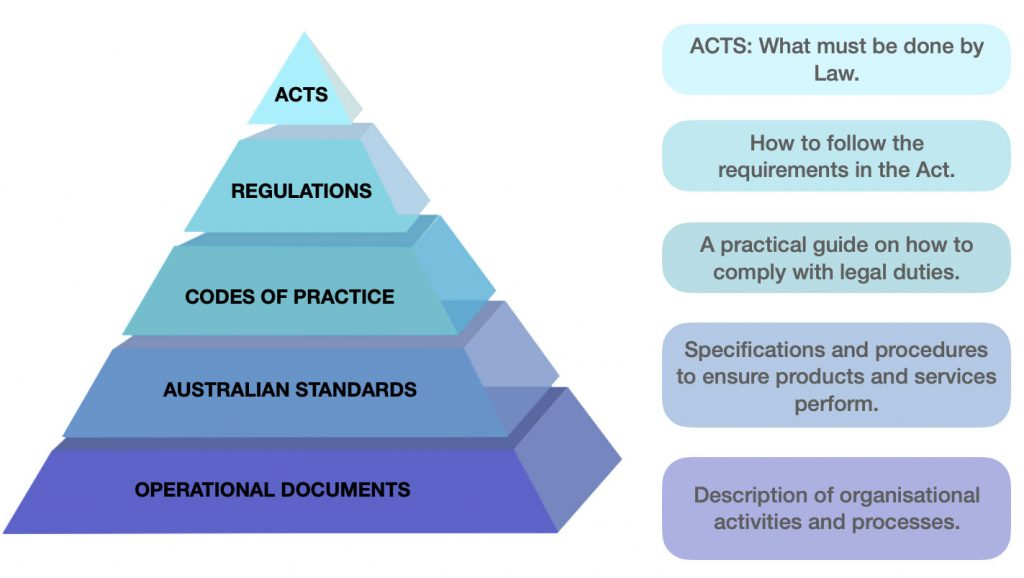
Together, these elements form the Electrical Safety Laws framework. However, it is crucial to note that Electrical Safety Laws in Australia are state-based, not national. Each state and territory has its own legislation, regulations, and codes, though they share many similarities to ensure a consistent approach to electrical safety nationwide. This state-based system enables local governments to address specific regional needs while maintaining overall alignment with broader safety standards.
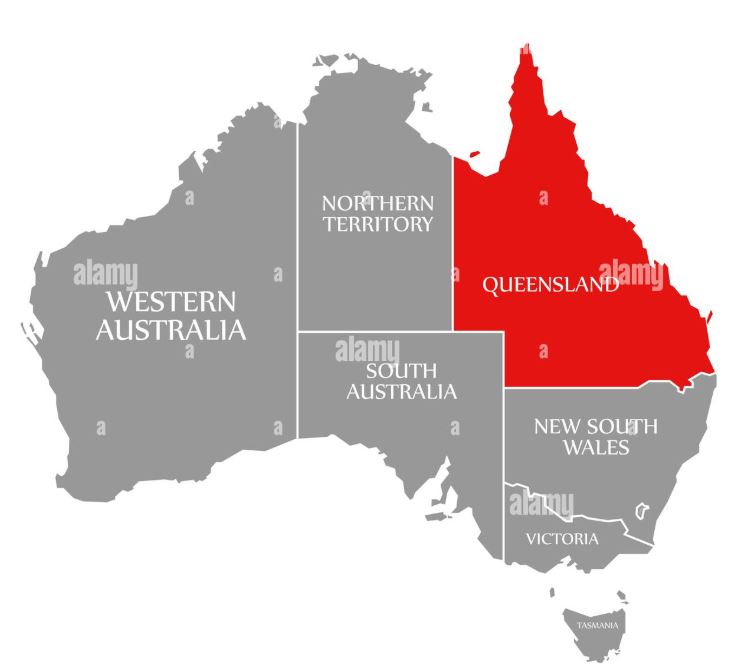
Australian Example: Queensland
Standards relating to Electrical Safety include:
The Work Health and Safety Act 2011 (Qld)
Work Health and Safety Regulation 2011 (Qld)
Code of Practice for Managing Electrical Risks in the Workplace
Flow of Information:
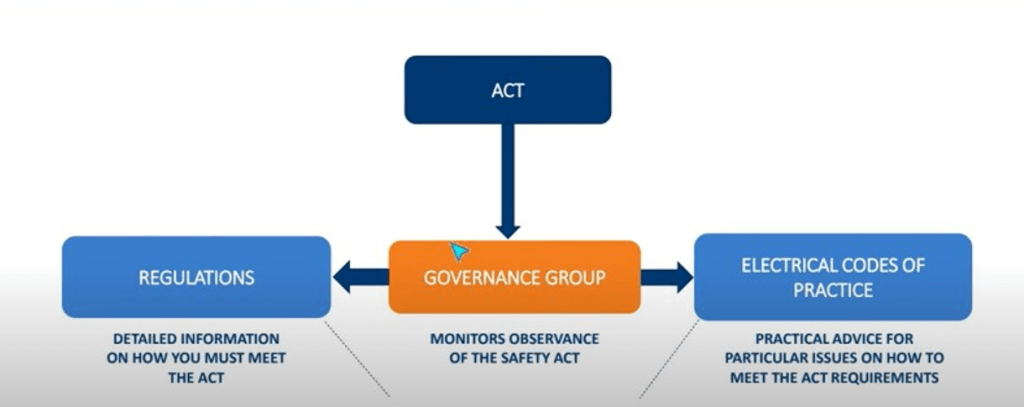
- The Act sets the foundation → Regulations provide detailed implementation steps → Governance Group monitors adherence → Codes of Practice offer practical, actionable advice.
Electrical Safety Laws outline the steps needed to prevent injury, death, or property damage caused by electricity. The Work Health and Safety Act serves as the overarching legal framework, covering key areas such as duty of care, compliance, penalties for breaches, incident notifications, and workers’ rights to stop unsafe work. It also defines the roles of regulators and inspectors and sets industry standards through Regulations and Codes of Practice. Additionally, it ensures consumer protection by requiring electrical work to be properly performed and completed. In South Australia, the Act is administered by SafeWork SA, the governing body.
The purpose of Regulations is to establish uniform standards that ensure the longevity, safety, and reliability of electrical systems. Regulations guide designers in selecting appropriate and compatible devices that are consistently available in the market while meeting basic safety requirements. They also ensure that manufacturers, designers, and contractors adhere to standardized safety practices to protect humans, property, and livestock from electrical risks in everyday life. Furthermore, the regulations emphasize the maintenance of quality and reliability in both equipment and installations, ensuring safe and uninterrupted electrical service. Key Areas of Electrical Safety Regulations are :
- Protection against shocks: Direct and indirect electric shocks.
- Protection against faults: Thermal effects, overcurrent, fault current, and overvoltage.
- Basic design standards: Supply conditions, power demand, and emergency supplies.
- Equipment selection: Properly sized conductors, emergency services, safe isolation, switching, and accessibility.
- Workmanship quality: Use of proper materials, jointing, connections, and protection against high surface temperatures.
- Verification and testing: Ensuring equipment complies with regulations through proper testing and inspection.
The Work Health and Safety Regulations 2012 provide detailed guidance on meeting the requirements of the Electrical Safety Act for both electrical equipment and installations. These regulations are called up within the Work Health and Safety Act 2012 and include:
- General risk and workplace management
- Hazardous work
- General electrical safety in workplaces and for energised electrical work
- Plant and structures
- Construction work
- Hazardous materials
- Asbestos management
- Major hazard facilities
- Mines
The Code of Practice for Managing Electrical Risks in the Workplace provides practical guidance on meeting Work Health and Safety (WHS) requirements. It is approved under the WHS Act and offers clear, evidence-based steps to manage electrical risks effectively during work. This helps ensure safety and compliance with the law.
The Regulatory Body is responsible for administering various acts and regulations, including those related to electrical safety. Its roles include providing advice and education on work health and safety, issuing licences and registrations for workers and equipment, investigating workplace incidents, and enforcing WHS laws to ensure safety and compliance.
Through ASNZ 3000
How to Interpret a Standard
| Term | Definition |
|---|---|
| Informative | Information or guidance only |
| Normative | Must be conformed to claim compliance to the standard |
| Deemed to comply | A requirement can be met by following a specific standard or method |
| The wiring rules | AS/NZS 3000 |
| Bold print | Indicates opening statements defining the fundamental principles and requirements |
| Shall | Must adhere to |
The AS/NZS 3000 standard is divided into two main parts: Part 1 and Part 2, each serving distinct purposes to ensure electrical safety and compliance.
Part 1 of the standard, which is Section 1, outlines the essential requirements for a safe electrical installation. This forms the regulatory foundation for minimum safety standards. It is designed to be generally complete in itself, reducing the need for cross-referencing with Part 2. This allows Part 1 to stand alone or be called up in regulation independently or alongside Part 2, depending on the specific requirements.
Part 1 aims to establish high-level safety performance outcomes and conditions that ensure electrical systems meet essential safety requirements. It provides a clear enforcement link to Part 2, where practical compliance methods are defined. Importantly, Part 1 maintains alignment with international standards, particularly IEC 60364, to ensure global consistency at the level of essential safety. Furthermore, it establishes that the A requirement can be met by following a specific standard or method, which simplifies compliance by giving clear benchmarks for safety.
In addition to its prescriptive role, Part 1 provides a mechanism for alternative design and installation practices. This allows for flexibility in meeting safety outcomes, enabling innovative solutions to be assessed and approved as long as they align with the standard’s functional requirements. By combining clear safety objectives, regulatory alignment, and flexibility for alternative solutions, Part 1 ensures a robust and adaptable safety framework for electrical installations.
Part 2, which consists of sections 2 to section 8 focuses on the installation practices required to comply with safety requirements of Part 1. It describes methods and practices for meeting standards. By following Part 2, designers, installers, and contractors can ensure they comply with the functional requirements outlined in Part. I’ve covered and published posts about some of the following topics related to ASNZ 3000
- Conductor Selection: Ensure appropriate conductor sizes based on current-carrying capacity, insulation type, and installation methods.
- Voltage Drop: Limit voltage drop within the permissible range by following simplified tables or detailed calculations.
- Circuit Protection: Proper selection of protective devices (e.g., circuit breakers, fuses) to protect against overload, short circuits, and fault currents.
- Earthing Systems: Design earthing conductors and connections to ensure safety, continuity, and compliance with impedance limits.
- Switchboard Design: Verify location, construction, accessibility, and safety requirements for switchboards.
- Current Diversity: Assess simultaneous loads on circuits (e.g., lighting, socket outlets, and appliances) to ensure efficient and safe operation.
- Maximum Demand: Calculate the total load a system can experience, applying diversity factors to prevent overloading circuits, equipment, and switchboards.
- Installation of Cables: Plan installation methods (underground, aerial, or enclosed) to protect cables from mechanical damage and external influences.
- Protection Against Thermal Effects: Ensure measures are in place to prevent overheating or fire hazards from electrical installations.
- Safety Services: Provide safety services like emergency power, fire protection systems, and clearances for critical installations.
- Testing and Verification: Verify installations for proper connections, fault-loop impedance, and RCD operations to meet compliance standards.
- Fault Current Management: Design installations to handle expected fault currents, ensuring protective devices operate safely and effectively.
- Segregation of Circuits: Ensure separation of power, control, and communication circuits to prevent interference and hazards.
- Overvoltage Protection: Include surge protection devices (SPDs) to safeguard sensitive equipment from voltage spikes.
- Accessibility and Isolation: Plan for accessible locations and proper isolation points for maintenance, inspection, and emergency shutdown.
AS/NZS 3820
AS/NZS 3820 is the Australian/New Zealand Standard titled “Essential safety requirements for electrical equipment.” It sets out the minimum safety requirements for electrical equipment before it is placed on the market in Australia and New Zealand.
There is no specific certificate called “AS/NZS 3820 certification” issued for products in Australia. The importer or supplier of the electrical equipment is legally responsible for ensuring the product complies with AS/NZS 3820 and any other relevant standards
According to EESS Electrical Equipment Safety System
| Risk Level | Description | Certification Requirement |
| Level 3 | High risk (e.g., power supplies, some industrial devices) | Certificate of Conformity (mandatory) |
| Level 2 | Medium risk | Test report and registration (on request) |
| Level 1 | Low risk (most ELV devices not for safety use) | Documentary evidence of compliance (on request) |
In As/Nz3000 the insulation class defined a sbelow
- Class 1 appliances have basic insulation and a protective earth connection, with examples like kettles and refrigerators.
- Class 2 appliances use double insulation, eliminating the need for an earth connection, as seen in tools and TVs.
- Class 3 appliances rely on low-voltage power sources, such as chargers for laptops and mobile phones.
Terms:
- “Service Line” refers to the wire or cable that transports electricity from the public network to a building (such as a house, factory, or office).

 Electrical Engineer