
Power Meter Certification Requirements for Regulatory Compliance in Australia: On-Market Networks vs. Off-Market Embedded Networks
Introduction
In Australia’s complex energy landscape, power meter certification plays a crucial role in ensuring regulatory compliance, accurate billing, and safety for both commercial and residential electricity users. The certification requirements vary significantly depending on whether the meter is part of an on-market network or an off-market embedded network.
This comprehensive guide explores the regulatory frameworks, certification processes, and compliance requirements for power meters in both network types.
The Australian electricity market operates under a multi-layered regulatory framework, with different requirements for traditional grid-connected meters (on-market networks) versus those in privately owned networks serving multiple customers (off-market embedded networks). Understanding these distinctions is essential for compliance and effective operation.
Regulatory Framework in Australia
Key Regulatory Bodies
Several regulatory authorities oversee power meter certification in Australia, each with specific responsibilities:
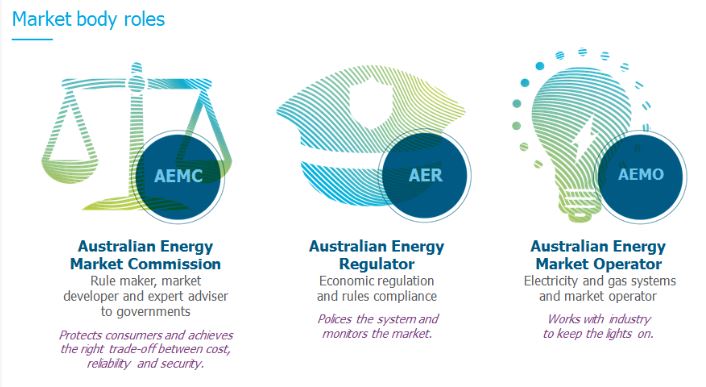
Australian Energy Market Commission (AEMC) – The rule-making body for Australian electricity and gas markets. The AEMC established the “Competition in metering rules” which began in December 2017, requiring all new meters to be advanced or ‘smart’.
Australian Energy Regulator (AER) – Enforces the rules for wholesale electricity and gas markets and regulates energy networks. The AER also administers the exemption framework for embedded networks.
Australian Energy Market Operator (AEMO) – Manages electricity and gas systems and markets across Australia. AEMO establishes qualification procedures for metering providers and maintains the market settlement systems.
National Measurement Institute (NMI) – Administers the National Measurement Act which governs pattern approval and verification requirements for utility meters used for trade.
State-based electrical safety regulators – Bodies such as Energy Safe Victoria that oversee compliance with electrical safety requirements at the state level.
Relevant Legislation and Standards
The certification of power meters is governed by several key pieces of legislation and standards:
National Electricity Rules (NER) – The primary regulatory instrument governing the operation of the National Electricity Market (NEM), including detailed requirements for metering.
National Measurement Act – Establishes the legal framework for measurement in Australia, including requirements for pattern approval and verification of utility meters used for trade.
AS/NZS 4417.1 & 2 – Australian/New Zealand standards that provide general
requirements for the use of the Regulatory Compliance Mark (RCM), including location of the marking on equipment and dimensional requirements.
AS/NZS 3000 (Wiring Rules) – Establishes safety standards for electrical installations, including metering installations.
The Regulatory Compliance Mark (RCM)
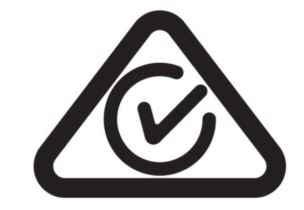 The Regulatory Compliance Mark (RCM) is a trademark owned by electrical regulators and the Australian Communications Media Authority (ACMA). For electrical safety, inscope electrical equipment must not be sold unless marked with the RCM in compliance with AS/NZS 4417.1 & 2 and the Electrical Equipment Safety System (EESS).
The RCM represents compliance with two independent schemes: – Electrical Equipment Safety System (EESS) – ACMA’s labelling requirements. This single mark helps reduce red tape for industry and saves costs by eliminating the need to track and mark equipment with unique approval/certificate numbers.
On-Market Network Power Meter Certification
Definition and Characteristics
On-market networks refer to electricity networks that are part of the National Electricity Market (NEM) where:
- Meters are registered with the Australian Energy Market Operator (AEMO)
- Customers can choose their electricity retailer
- Metering services are provided by accredited Metering Providers and Metering Data Providers
- The network operates under the National Electricity Rules (NER)
Metering Requirements Under the National Electricity Market
Under the AEMC’s Competition in metering rules, which started in December 2017:
- All new meters must be advanced or ‘smart’
- Retailers (not distribution network businesses) have overall responsibility for metering services and are the single point of contact for customers
- These rules apply to customers in New South Wales, Queensland, Tasmania, the Australian Capital Territory and South Australia
- Victorian customers are covered by state regulation that places responsibility for metering with local distribution businesses
For power stations in the National Electricity Market (NEM), meters must use NEM standard metering set out in the National Electricity Rules (NER) for their connection point meter. Power stations outside the NEM must use metering that allows determination of electricity generated, meets relevant jurisdictional standards, and is located at points determined by relevant state or territory authorities.
Role of Metering Providers and Metering Data Providers
The National Electricity Rules require AEMO to establish a qualification process for the accreditation and registration of:
- Metering Providers (MPs) – Responsible for the provision, installation, and maintenance of metering installations.
- Metering Data Providers (MDPs) – Responsible for the collection, processing, and delivery of metering data
Once accredited and registered, these providers may be engaged to provide metering services to NEM participants and AEMO. The qualification process ensures that these service providers meet the technical, capability, and resource requirements necessary to perform their roles effectively.
Technical Specifications and Standards
Meters in on-market networks must meet rigorous technical specifications:
- Pattern Approval and Verification – Under trade measurement laws, specified electricity meters used for trade (billing for usage) must be pattern approved and verified according to the National Measurement Act.
- Advanced Metering Functionality – All advanced meters now come with the ability to communicate remotely, which enables accurate billing, wider variety of services, easier identification of faulty meters, and better network performance monitoring.
- Technical Requirements – Meters must:
- Be accurate in accordance with Schedule 7.4 of Chapter 7 of the NER
- Have electronic data transfer facilities
- Include a communications interface for remote acquisition of data
- Record energy data in intervals of at least every 30 minutes
- Be capable of separately recording energy flows in each direction where bidirectional flows occur
- Include facilities for storing interval energy data for at least 35 days.
Compliance and Enforcement
AEMO and the AER monitor compliance with metering requirements through:
- Audits of metering installations
- Verification of meter accuracy
- Monitoring of metering data quality
- Enforcement actions for non-compliance
The regulatory framework includes provisions for temporary variations to methods of calculating electricity generation when data from meters is not available, but these are only permitted on a temporary basis with requirements to fix metering issues within specified timeframes.
Recent Regulatory Changes
The Australian Energy Market Commission (AEMC) has approved an accelerated smart meter rollout in Australia’s national electricity market to be finalized by 2030. This will affect all on-market networks and aims to provide consumers with better access to their energy usage data, enable more efficient network operation, and support the integration of renewable energy sources.
Off-Market Embedded Network Power Meter Certification
Definition and Characteristics
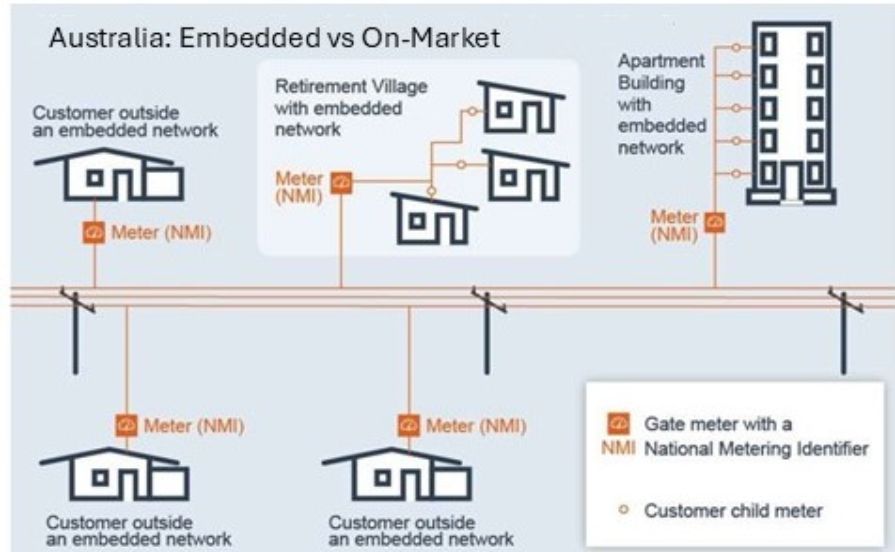
Embedded networks are private electricity networks that serve multiple premises, such as in apartment blocks, caravan parks, and shopping centers. In off-market embedded networks:
- The electricity account holder for the whole site (the embedded network operator) onsells electricity to the individual customers within the site’s embedded network
- Customers’ meters are not registered in the wholesale market systems (MSATS)
- Customers purchase electricity directly from the embedded network operator rather than from a market retailer
Embedded Network Structure
Embedded networks typically have:
- A gate or ‘parent’ meter that records the energy consumption of the entire embedded network (often owned by a Major Electricity Company/MEC)
- ‘Child’ meters that record the energy consumption of each customer (normally owned by the metering provider business or embedded network operator)
Role of Embedded Network Managers
From December 1, 2017, some network exemption holders must appoint an Embedded Network Manager (ENM), which is a service provider accredited by AEMO. The ENM’s role is to facilitate the transfer of a customer from off-market to on-market (and back again if required).
Key points about ENMs:
- Some network exemption holders were required to appoint an ENM by March 31, 2018 – Others are permitted to delay the appointment of an ENM until a resident or tenant enters a contract with an energy retailer
- The ENM is responsible for providing National Metering Identifiers (NMIs) to customers within embedded networks who want to go on-market – In most cases, the costs of appointing or becoming an ENM cannot be charged to customers directly
Technical and Safety Requirements
In Victoria, for example, Energy Safe Victoria requires that:
– The installation of non-MEC metering equipment requires the service provider to be a Registered Electrical Contractor
– Licensed electrical workers must perform the work
– Prescribed work must be inspected by a Licensed Electrical Inspector
– Certificates of electrical safety (COES) must be issued in relation to that work
– The embedded network must be safe and maintained and operated safely
Customer Access to Retail Competition
Since December 1, 2017, users of embedded networks can choose to buy electricity from the embedded network operator or from an authorized retailer. If a customer chooses to go on-market:
– The meter must be NEM-compliant
– If the meter is compliant, the retailer or customer can either purchase/lease the meter from the embedded network operator or replace it – If the meter isn’t compliant, it will need to be replaced.
Key Differences Between On-Market and Embedded Network Requirements
Regulatory Oversight
On-Market Networks:
– Directly regulated under the National Electricity Rules
– Metering providers and data providers must be accredited by AEMO
– Full compliance with all aspects of the NER is required
Embedded Networks:
– Operate under an exemption framework administered by the AER
– Less stringent regulatory requirements, though this is changing with recent
reforms
– State-based regulations may apply differently
Metering Technology and Standards
On-Market Networks:
– All new meters must be advanced or ‘smart’
– Must comply with full NEM metering requirements
– Pattern approval and verification according to the National Measurement Act
Embedded Networks:
– Meters installed after January 1, 2012, should be NEM compliant
– Parent and child metering arrangement
– Compliance requirements may vary based on exemption class
Compliance Pathways:
On-Market Networks:
– Direct compliance with the NER
– Accreditation through AEMO for service providers
– Regular auditing and monitoring
Embedded Networks:
– Compliance through exemption conditions
– Appointment of an Embedded Network Manager when required
– Compliance with state-based electrical safety regulations
Cost Implications
On-Market Networks:
– Costs of metering services typically passed through to customers via retailers
– Competitive market for metering services
Embedded Networks:
– Network costs can be recovered from occupants even if they
choose another supplier
– Costs of appointing an ENM generally cannot be directly
charged to customers
– Embedded network operators must bear the cost of replacing
non-compliant meters installed after January 1, 2012
Consumer Protection
On-Market Networks:
– Full consumer protections under the National Energy Retail Law
– Access to energy ombudsman schemes
– Freedom to choose retailers
Embedded Networks:
– Historically limited consumer protections, though reforms are addressing this
– Access to retail competition since December 2017, but practical barriers
may exist
– State-based regulations may provide additional protections
Best Practices for Compliance
Documentation and Record-Keeping: Maintaining comprehensive records is essential for demonstrating compliance:
– Keep detailed records of meter installations, testing, and maintenance
– Document exemption applications and approvals
– Maintain certificates of electrical safety and inspection reports
– Keep records of ENM appointments and activities
Testing and Maintenance Schedules: Regular testing and maintenance ensure ongoing compliance:
– Implement a schedule for meter testing based on regulatory requirements
– Conduct regular audits of metering installations
– Promptly address any identified issues or deficiencies
– Document all testing and maintenance activities
Engaging with Accredited Service Providers: Working with properly accredited service providers is crucial:
– Ensure Metering Providers and Metering Data Providers are accredited by AEMO
– Verify that Embedded Network Managers have proper accreditation
– Engage licensed electrical contractors for installation and maintenance work
– Use licensed electrical inspectors for required inspections
Staying Updated with Regulatory Changes: The regulatory landscape is constantly evolving:
– Subscribe to updates from regulatory bodies (AEMC, AER, AEMO)
– Participate in industry forums and associations
– Regularly review exemption guidelines and conditions
– Monitor changes to relevant standards and legislation
Preparing for Audits and Inspections: Being audit-ready helps ensure ongoing compliance:
– Conduct internal audits to identify and address compliance issues
– Maintain organized records that can be easily accessed during inspections
– Develop and implement compliance management systems
– Train staff on compliance requirements and procedures
Future Trends and Developments
Impact of Increasing Distributed Energy Resources The growth of distributed energy resources (DER) such as rooftop solar and battery
storage is changing the metering landscape:
– Meters need to handle bi-directional energy flows
– More sophisticated monitoring and control capabilities are required
– Integration with energy management systems is becoming more important – New metering configurations for community energy projects and microgrids
Evolution of Metering Technology Metering technology continues to advance:
– Increasing functionality of smart meters
– Integration with home energy management systems
– Enhanced data analytics capabilities
– Improved communication technologies
Potential Regulatory Changes Several regulatory changes are on the horizon:
– Continued reforms to embedded network regulation
– Further standardization of metering requirements
– Enhanced consumer protections for embedded network customers
– Integration of metering with broader energy market reforms
Implications for Network Operators and Customers These changes will have significant implications:
– Network operators will need to adapt to more stringent requirements
– Customers will gain more choice and control over their energy supply
– New business models will emerge for metering services
– Greater transparency in energy usage and costs
AMI and EMS
- EMS (Energy Management Systems) typically fall under the NCC (National Construction Code), whereas AMI (Advanced Metering Infrastructure) is governed by the AER (Australian Energy Regulator).
- In Victoria, the mandated AMI protocol is Zigbee, which unfortunately we do not currently support in our existing product offerings.
- For the rest of Australia, under the Power of Choice framework, a certified smart meter is generally sufficient. In these cases, we can confidently recommend the EDMI MK7C and MK10 meters. These meters fully comply with the applicable installation rules and have all the required certifications.
Please find further details here:
- https://www.aer.gov.au/system/files/2024-02/Ergon%20-%2010.01%20-%20Legacy%20Metering%20Explanatory%20Statement%20-%20January%202024%20-%20public_0.pdf
- https://www.audit.vic.gov.au/sites/default/files/111109-AMI-Full-Report.pdf?
Conclusion
Understanding power meter certification requirements is essential for regulatory compliance in both on-market networks and off-market embedded networks in Australia. The regulatory framework is complex and continues to evolve, with different requirements applying to different network types.
For on-market networks, compliance with the National Electricity Rules and the requirements of the National Electricity Market is paramount. Meters must be advanced or ‘smart’, pattern approved and verified, and installed and maintained by accredited service providers.
For off-market embedded networks, operating under the exemption framework administered by the AER, compliance with exemption conditions is crucial. This includes ensuring meters are NEM-compliant, appointing an Embedded Network Manager when required, and complying with state-based electrical safety regulations.
As the energy landscape continues to evolve, with increasing distributed energy resources and advancing technology, staying informed about regulatory changes and best practices will be essential for all stakeholders in the electricity market.
By following the guidance outlined in this article, network operators, property
developers, facility managers, and other stakeholders can ensure they meet their compliance obligations while providing safe, reliable, and accurately metered electricity to their customers.
References
- Australian Energy Market Commission (AEMC). “Metering.” https://www.aemc.gov.au/energy-system/electricity/electricity-system/metering
- Electrical Equipment Safety System (EESS). “The Regulatory Compliance Mark (RCM) (General).” https://www.eess.gov.au/rcm/regulatory-compliance-mark-rcmgeneral/
- National Measurement Institute. “Utility meters.” https://www.industry.gov.au/national-measurement-institute/trade-and-industry/instruments-industry/utilitymeters
- Australian Energy Market Operator (AEMO). “Metering procedures, guidelines and processes.” https://aemo.com.au/energy-systems/electricity/national-electricitymarket-nem/market-operations/retail-and-metering/metering-proceduresguidelines-and-processes
- Australian Energy Market Operator (AEMO). “Accreditation and Registration.”https://aemo.com.au/energy-systems/electricity/national-electricity-market-nem/market-operations/retail-and-metering/accreditation-and-registration
- Australian Energy Regulator (AER). “Embedded Network Managers.” https://www.aer.gov.au/embedded-network-managers
- Business Queensland. “Embedded electricity networks.” https://www.business.qld.gov.au/industries/mining-energy-water/energy/electricity/embedded-electricity-networks
- Energy Safe Victoria. “Embedded network metering.” https://www.energysafe.vic.gov.au/certificates-electrical-safety/obligations-andguidelines/embedded-network-metering
- Clean Energy Regulator. “Electricity meters.” https://cer.gov.au/schemes/renewable-energy-target/large-scale-renewable-energy-target/large-scalegeneration-certificates/calculate-large-scale-generation-certificate-entitlements/electricity-meters

 Electrical Engineer